Skip to content

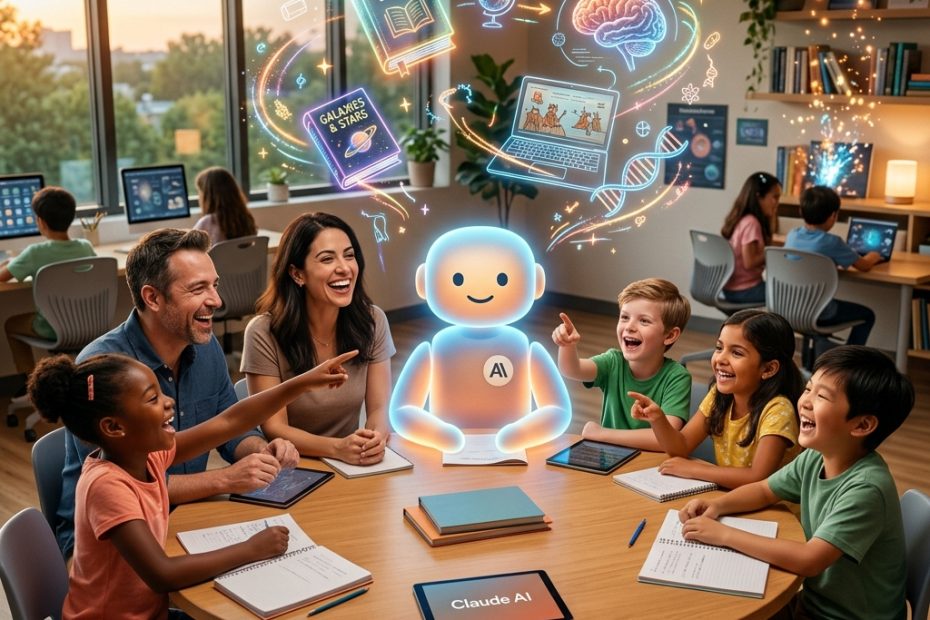
Here’s How Claude Became the Super-Smart Classroom Sidekick Everyone’s Talking About.

Imagine never forgetting a single detail from the whole school year.

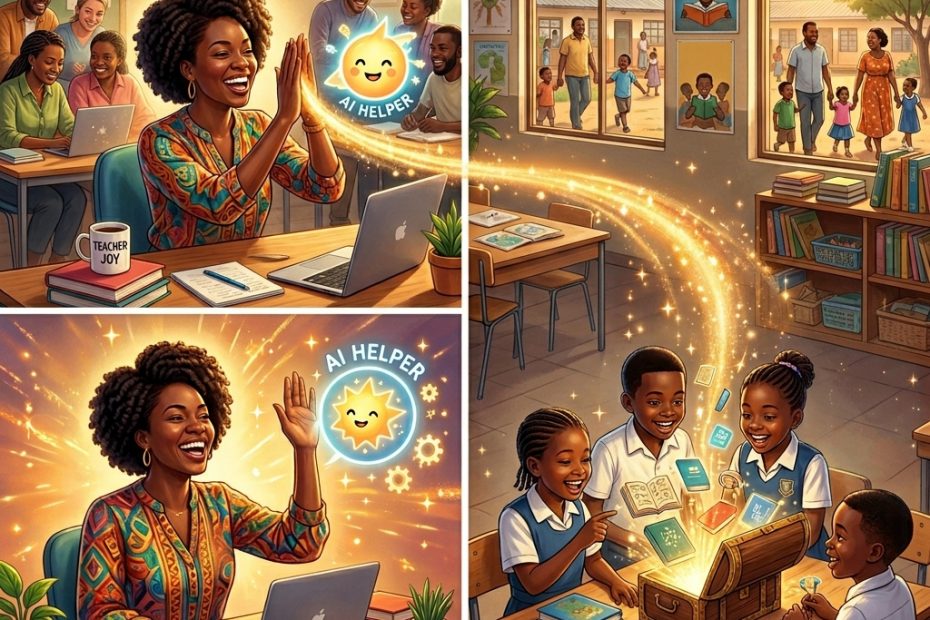
That’s Claude in 2026. With its massive memory and clever new tricks like ‘Dreaming’ agents that actually learn and improve, this AI has become the ultimate classroom sidekick.

Teachers are reclaiming evenings by generating differentiated lessons, fun activities, and personalized feedback in minutes. Students get 24/7 patient tutoring that adapts to how they learn best. Parents love being able to jump in and support homework without feeling lost.
From analyzing student drawings to building entire project plans, Claude turns overwhelming tasks into exciting possibilities.

And the best part? It’s built to be helpful and safe, keeping the human spark at the center of education.
At Smart Teacher Online, we’re thrilled to see families and educators using these tools to make learning more joyful and effective. Whether you’re a busy teacher, a curious student, or a supportive parent, Claude feels like that reliable friend who always has your back—and a few brilliant ideas up its sleeve.

Ready to meet your new favorite learning companion?

Happy Mothering Sunday! Here’s to Celebrating Nigerian Mothers and Their Love

In Nigeria, Mothering Sunday (Mother’s Day) is a beautiful time to celebrate the incredible women who hold our families together with love, strength, and wisdom. At Smart Teacher Online, we want every child to understand and appreciate the special role mothers play in our lives and culture.

Let us share a short story. In a lively home in Lagos, Mama Chinedu wakes up early every day. She prepares breakfast, gets the children ready for school, goes to work, and still finds time to listen to their stories when they return. When her son asked why she never gets tired, she replied with a warm smile and an Igbo proverb: “A mother’s love is like the sun — it never stops shining.”

Nigerian mothers come from many tribes — Yoruba, Igbo, Hausa, Ijaw, and more — but they share the same big heart. They teach children respect by showing them how to greet elders: “Ẹ káàbọ̀” or “Good morning, Aunty.” They tell beautiful folktales about Tortoise, Spider, and the clever girl who solved problems with wisdom. They cook meals that bring the whole family together — from amala and ewedu to tuwo shinkafa and ogbono soup.

On Mothering Sunday, families spoil their mothers a little. Children make handmade cards with colorful drawings, help with chores, sing praise songs, and sometimes surprise them with breakfast in bed. Many families go to church to pray and thank God for mothers. Others visit grandparents to honor the women who raised the nation.

Mothers are also our first teachers of safety. They warn us about strangers, both in real life and online. They remind us not to share personal information on the internet and to always tell them when something feels wrong. Their care is our everyday protection.

This Mothering Sunday, let us show our mothers real love. Help at home, say kind words, draw pictures, write poems, or simply give them rest. Tell them, “Thank you for everything you do.”

To every Nigerian mother reading this — whether you are biological, adoptive, auntie, or grandmother — thank you for your sacrifices, prayers, laughter, and strength. You make Nigeria beautiful.

Happy Mothering Sunday! Let us celebrate our mothers today and every day.

Raising Emotionally Intelligent Children in the Digital Age.

Ten-year-old Nneka came home in tears after friends laughed at her photo in a group chat.
Instead of anger, her mother sat with her: “Let’s breathe. How does this make you feel?”
That moment opened the door to emotional intelligence — the superpower every child needs in the digital age.
From naming feelings and practicing empathy online to managing reactions and building self-worth beyond likes, here’s how families can raise emotionally smart kids.
Technology connects us, but emotional intelligence helps us connect with care.
Read the full guide: Raising Emotionally Intelligent Children in the Digital Age.

Online Privacy 101 for Parents and Kids.

Nine-year-old Ada proudly posted a beach family photo — until her mom noticed their house number, school name, and exact location were clearly visible.
That moment sparked an important family conversation about online privacy.
From strong passwords and privacy settings to the “Stop, Think, Ask” rule — here’s a simple, story-filled guide every parent and child needs.
Online privacy isn’t about fear. It’s about giving kids the superpower to enjoy technology safely.
Read “Online Privacy 101 for Parents and Kids” and start the conversation today.

Digital Literacy: What Every Child Needs to Know.

It was a simple click for “free game coins” — until 11-year-old Chidi’s tablet slowed and scary messages appeared.
That night he learned: using technology isn’t enough. You must know how to stay safe, spot fakes, and think critically online.
Digital literacy is the essential skill every child needs today.
From protecting privacy to creating responsibly and questioning AI — these are the superpowers that turn curious kids into confident digital citizens.
Read the full story: How we can equip our children for a connected world.

How AI Tutors Are Changing the Classroom.

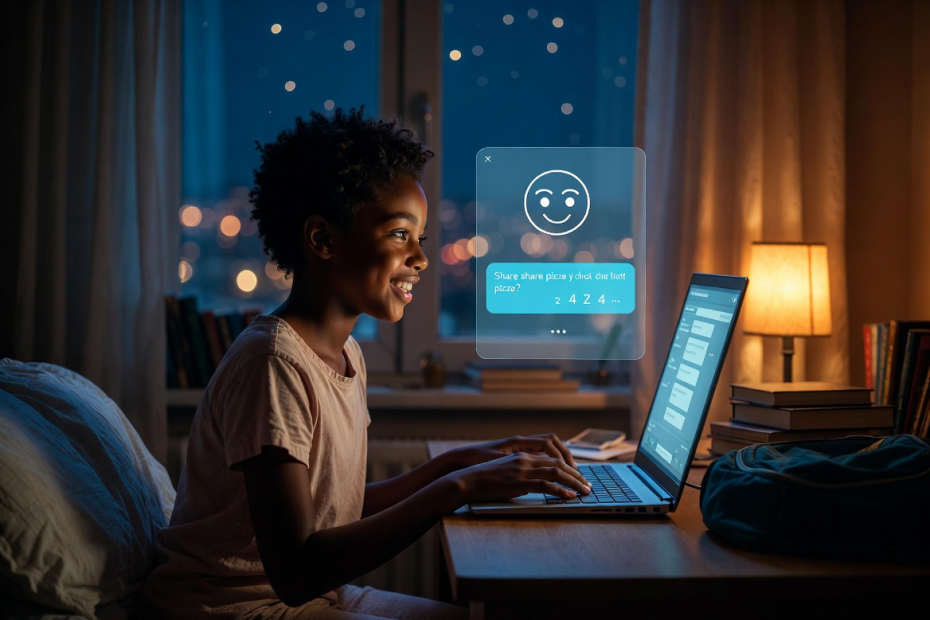
It’s 10:30 PM. A 12-year-old in Lagos struggles with fractions until her AI tutor asks one simple pizza-sharing question — and everything clicks.
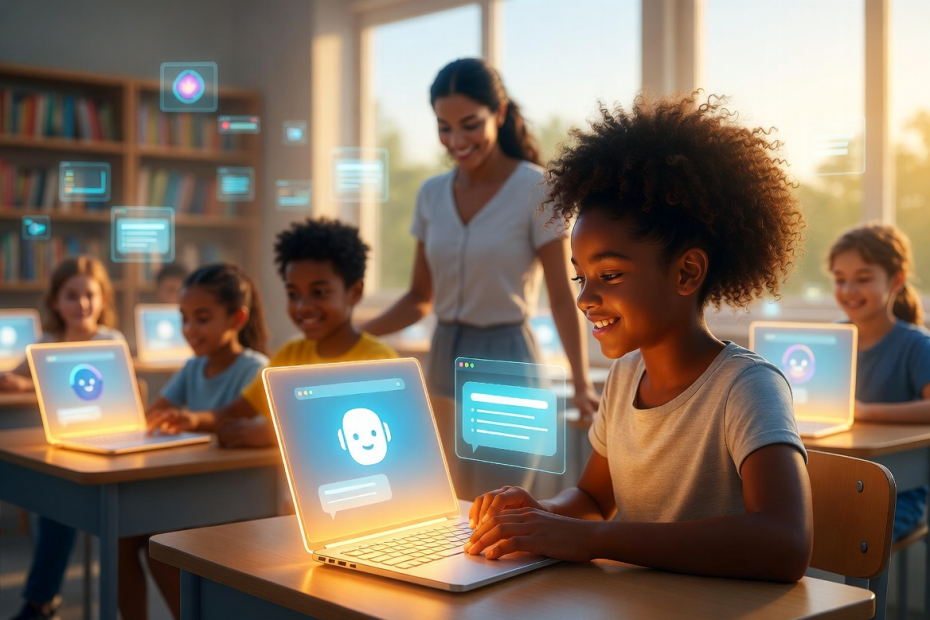
This is the new reality of education. AI tutors like Khanmigo are giving every child access to patient, personalized guidance that was once only for the wealthy.
They’re not replacing teachers — they’re freeing them to do what humans do best: mentor and inspire.
Read how AI is transforming classrooms worldwide.

WHAT ARE 2-FACTOR AUTHENTICATIONS AND WHY ARE THEY IMPORTANT?

In today’s digital world, keeping our online accounts safe is as important as locking our front doors.

That’s why 2-Factor Authentication, or 2FA, has become everyone’s best friend – from kids doing homework on tablets to parents managing family finances and professionals handling work emails. But what exactly is it, and why does it matter so much?
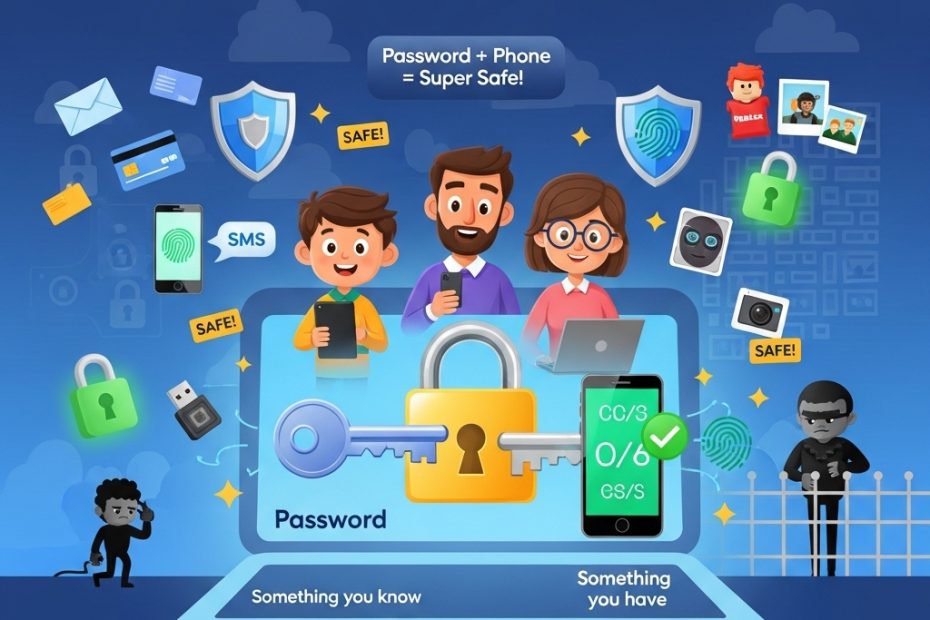
Simply put, 2FA is a double-lock system for your accounts. You already use one lock every day: your password (something you know).

But passwords can be guessed, stolen in data leaks, or tricked out of you by sneaky phishing emails. 2FA adds a second, completely different proof that it’s really you – like a code sent to your phone, your fingerprint, or a quick face scan on your device.
Here’s how it works in easy steps: First, enter your username and password. The website checks them. Then it asks, “Prove it’s you!” You get a special code on your phone or use your fingerprint. Only when both match do you get inside. Hackers might steal your password from somewhere else, but without that second step, they’re locked out!

There are several types of 2FA factors: knowledge (passwords or security questions), possession (phone codes or authenticator apps), biometric (fingerprints or face ID), and even location or time checks. Most people start with password plus phone code – it’s simple and free on Gmail, banking apps, school platforms, and games like Roblox.

Why is it so important? Because one password is no longer enough in our connected world. 2FA stops 99% of automatic hacker attacks, protects kids’ gaming and school accounts from strangers, prevents parents from losing money to online fraud, and keeps professionals’ sensitive files secure. It reduces identity theft, phishing success, and data breaches. Even big companies use it to build customer trust!

Best of all, turning it on takes just two minutes in your account settings. Choose app-based or biometric options over plain texts for extra safety. Teach your family: never share codes, and enable 2FA everywhere – email first, then everything else.
At Smart Teacher, we believe every child, parent, and professional deserves to explore the internet without fear. 2FA is your simple superpower.

Turn it on today and enjoy peace of mind tomorrow!

HOW TO RECOVER A COMPROMISED WHATSAPP ACCOUNT.

Is your WhatsApp acting strange? Maybe friends are getting weird messages from you that you never sent, or you suddenly can’t log in.

Don’t worry – this is called a compromised account, and WhatsApp makes it easy for anyone (kids, parents, or professionals) to get it back quickly!

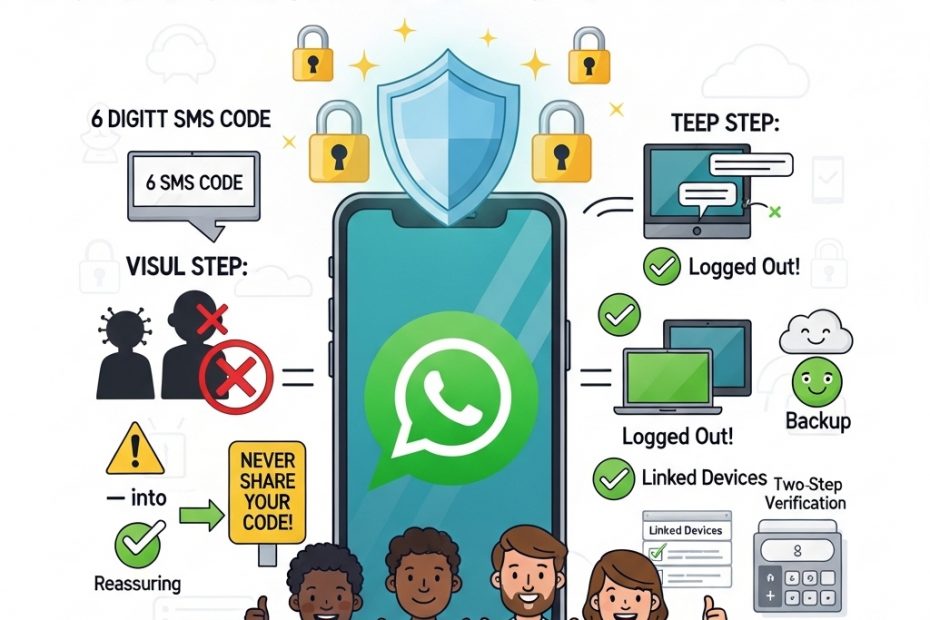
According to the official WhatsApp Help Center, the first rule is simple: never share your 6-digit registration code with anyone – not even family or friends. That code is like the only key to your private chats. If someone else is using your account, follow these easy steps right on your phone with the same SIM card.

Open WhatsApp and tap “Log back in” then “Continue.” Enter your full phone number (including the country code like +234) and press OK. Next, type the 6-digit code sent by text or phone call. As soon as you do this, WhatsApp automatically kicks out every other device that was secretly using your account – laptops, tablets, everything! You are now safely back inside.
What if it asks for a two-step verification PIN you don’t know? A hacker might have turned this on. Just wait 7 days and try again – you will still be able to log in after the wait, and the intruder gets locked out immediately.

Once you’re back, tell your family and friends right away: “Please ignore any strange messages from me!” This stops scams fast. Then make your account strong: go to Settings > Account > Two-step verification and turn it on (add your email so you never get stuck). Check Linked Devices and log out anything you don’t recognise. Turn on App Lock and Chat Lock using your phone’s fingerprint or face ID.

Remember, WhatsApp uses end-to-end encryption, so no one else could read your old messages – they stay safe on your phone only. If you had a Google Drive or iCloud backup, you can restore all your chats and photos too.

Prevention is the best friend: always update WhatsApp, set a strong voicemail password, and teach kids never to share codes.

Exciting News: A Super-Smart AI Helper That Finds Hidden Bugs in Computer Code!

Hey Smart Teacher friends—kids, parents, teachers, and everyone who loves staying safe online! Imagine if your favorite robot friend could look at the secret instructions (called “code”) that make apps, games, websites, and even school programs work… and then spot sneaky problems before bad guys find them. That’s what a company called Anthropic just made with their helpful AI named Claude!

They launched something cool called Claude Code Security. Right now, it’s like a special test version only for big companies and teams (not everyone can use it yet), but it’s already super impressive!

Think of computer code like a huge recipe book for building fun things on your phone or computer—like games, learning apps, or video chats.

Old ways to check for problems are like using a simple checklist to see if the recipe has any missing ingredients. It works okay, but it misses tricky mistakes.

Claude’s new way is different—it thinks like a really clever detective! It reads the whole recipe book, understands how all the steps connect, follows where information goes, and spots hidden dangers—like places where a bad person could sneak in and steal info or break things.

Claude found over 500 real hidden problems in popular free programs that experts had checked for years and never noticed! That’s like finding secret treasure that no one else saw.

Here’s how it keeps things safe and fair:

Finds the problem → Claude says, “Hey, there’s a weak spot here!”
Gives a fix idea → It suggests exactly what to change in the code, like “Add this extra lock here.”
Checks twice (or more!) → It double-checks its own work to avoid saying “danger!” when everything is fine (no false alarms).
Gives a score → It rates how serious the problem is (small, medium, or big) and how sure it is.
Humans decide → Nothing gets fixed automatically! Real people (developers) look at everything and say “yes” or “no.” This is called “human-in-the-loop”—people are always the boss!
Lots of the apps you use for school, games, drawing, or talking to friends are made with code. Sometimes bad guys try to use AI to find weak spots super fast and cause trouble.

Anthropic made this tool to help the good guys (the people who build and protect apps) fight back! It’s like giving the heroes a powerful shield so our online world stays safer for learning, playing, and chatting.

The more good AI helps find and fix problems, the fewer sneaky bugs sneak through. That means safer games, better homework tools, and fewer worries for parents.

This is part of something big: AI isn’t just for fun chats anymore—it’s becoming a helper that makes the whole internet stronger and safer for everyone!

What do you think? Would you like an AI detective to help keep your favorite apps safe? Tell us in the comments!

Loved this simple explanation? Come join the Smart Teacher family on Instagram and TikTok @smartteacheronline! We post fun videos, easy tips for kids and parents, cool cyber stories, and ways to become an online superhero. Subscribe and turn on notifications so you never miss out—let’s stay smart, safe, and excited about tech together! 🛡️💻✨

#SmartTeacherOnline #AICodeHelper #StaySafeOnline #KidsCyberTips #FamilyTechFun

Giving Knowledge, Gaining Safety: A Mother’s Quiet Strength on International Women’s Day.

Every March 8, the world celebrates women’s resilience, brilliance, and unbreakable spirit.

At Smart Teacher, this day feels deeply personal. The most inspiring women we know aren’t always in headlines—they’re in cozy homes across Alberta, Canada: Black mothers, aunts, grandmothers, and teachers quietly teaching their children how to stay safe online. In giving this knowledge, they gain something profound: peace of mind, stronger families, and a legacy of empowerment that lasts.
Meet Aisha, a teacher in Edmonton.
Her family traces back to the early 1900s, when African American pioneers fled the Jim Crow South for freedom in Alberta communities like Amber Valley and Keystone.

Today, she raises her 12-year-old daughter, Maya, in a quiet neighborhood where snow dusts the rooftops. A few years ago, Maya came home shaken. A classmate had shared how an online “friend” asked for details—school name, after-school spots, family habits. What seemed like friendly chat turned unsettling. Aisha recognized the warning signs instantly.
That evening, with snow falling softly outside, Aisha and Maya sat at the kitchen table with hot chocolate steaming between them. Aisha made a promise: fear wouldn’t win.

She would turn anxiety into strength.
They started small. After homework, they opened the laptop together. Aisha told stories of trailblazing Black women—from the mathematicians in NASA’s Hidden Figures who calculated paths to the stars, to wartime codebreakers who protected nations in silence, to today’s Black women leading cybersecurity teams who defend digital spaces so children can learn and play without fear.

She taught practical lessons patiently: spotting phishing emails, creating strong passwords, managing privacy settings, and knowing that not every online “friend” is safe.
“Knowledge is the one thing no one can ever take from you,” Aisha would say, her voice calm and warm. “And right now, that knowledge keeps you safe where you learn, connect, and dream.”
Over time, the lessons took root. Maya didn’t just learn to protect herself—she began guiding others.

She reminded classmates to check suspicious links, helped her grandparents set up two-factor authentication, and spoke up when something felt wrong online. One small act of giving had sparked a gentle ripple.
This is the heart of #GiveToGain—the true spirit of International Women’s Day.

When mothers invest time, wisdom, and courage in teaching digital safety, everyone benefits: families gain security, communities grow more resilient, and girls like Maya step forward with confidence to lead in tech, innovation, and life.
To every Black woman in Alberta shaping the next generation—you are the true guardians of this digital era.

Your quiet reminders, late-night privacy checks, and loving explanations are powerful acts of love that reach far beyond your home.
On this International Women’s Day, we honor you with heartfelt gratitude. When you give knowledge, you gain empowered children. When you give courage, you gain a safer world for all.

Thank you for being the quiet revolution.
Happy International Women’s Day.
Let’s keep giving. Let’s keep gaining. Together.

Found this excerpt moving? Join us on Instagram and TikTok @smartteacheronline for more inspiring stories, family-friendly tips, and content that empowers you to raise confident digital natives. Subscribe today—let’s build safer online spaces side by side! 💙
What safety lesson did a woman in your life teach you? Share in the comments—we read every one.

#IWD2026 #GiveToGain #SmartTeacherOnline #BlackWomenInTech #AlbertaFamilies #DigitalSafety

Welcome to 👋
Smart Teacher Platform.

Get simple parenting tips, fun Yoruba learning ideas, and cyber safety guidance to help your child learn better without pressure.

We don’t spam! Read our privacy policy for more info.