Skip to content

To our Smart Teacher online community? We say Thank You!

As Christmas approaches, it feels like the perfect time to pause and reflect on the journey we have shared together at Smart Teacher Platform. The holiday season invites us to slow down, look back with gratitude, and appreciate the people and moments that made the year meaningful. For us, that begins with you, our readers, who have been with us from the early days of this blog until now.

When Smart Teacher Platform was first created, it was built around a simple idea: cybersecurity awareness should be easy to understand and relevant to everyday life. We wanted parents to feel confident guiding their children online, kids to feel informed rather than afraid, and professionals to stay updated without feeling overwhelmed. Seeing this vision resonate with so many of you has been incredibly rewarding. Your continued support, engagement, and trust have been the foundation of our growth.

Throughout the year, we tackled important and sometimes complex topics together. We discussed online scams, data breaches, AI risks, privacy concerns, and the small digital habits that make a big difference. Each article was written with care, knowing that behind every screen is a real person trying to stay safe in a fast-changing digital world. Your feedback and loyalty reminded us that these conversations matter and that awareness truly has the power to protect.

Christmas is a time centered on family, connection, and care, values that closely reflect what we stand for as a platform. As homes fill with new devices, shared screens, and online activity during the holidays, it becomes even more important to approach technology with mindfulness. This season offers a gentle opportunity to talk about online safety in a positive way, whether that means setting boundaries, updating security settings, or simply checking in with loved ones about their digital experiences.

Looking ahead, we are excited for the year to come. Technology will continue to evolve, and with it, new opportunities and new risks will emerge. Our commitment remains the same: to provide clear, reliable, and family-friendly cybersecurity guidance you can trust. We look forward to continuing this journey with you, learning together, and building a safer digital future one conversation at a time.

As the year draws to a close, we want you to know how deeply grateful we are for your presence in this community. Thank you for reading, for sharing, and for choosing to stay informed. From all of us at Smart Teacher Platform, we wish you a joyful, peaceful, and safe Christmas filled with warmth and meaningful moments.

Follow us on Instagram @smartteacheronline for practical, family-friendly cyber tips and weekly updates.

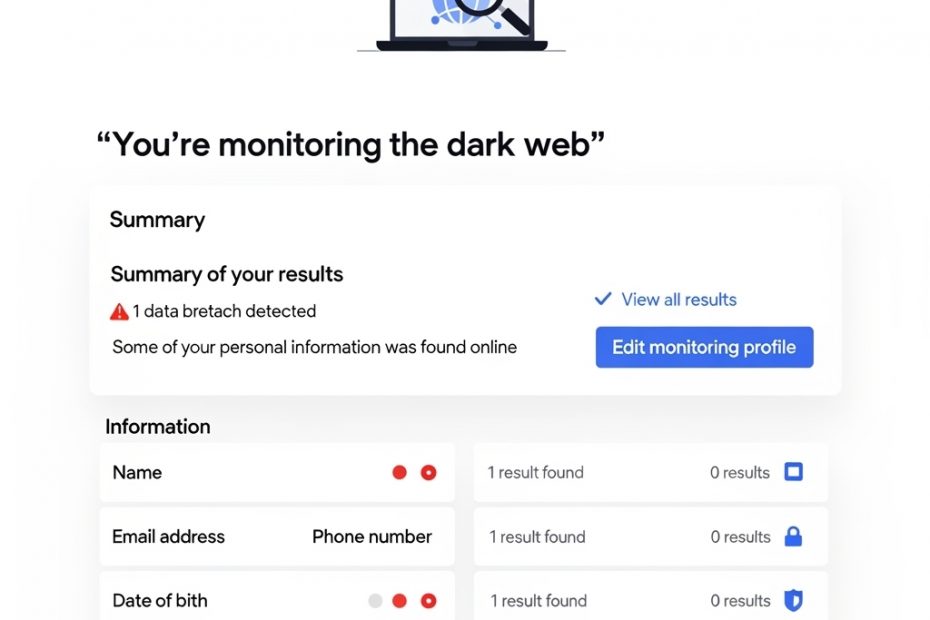
Google to Shut down Dark Web Monitoring Tool in February 2026.

Google has announced that it will shut down its dark web report tool in February 2026, ending a feature designed to alert users when their personal information appeared on the dark web. Scans for new breaches will stop on January 15, 2026, and the tool will be fully retired on February 16, 2026. While this may sound worrying at first, Google says the decision was made after feedback showed that the tool did not provide clear next steps for users after alerts were received.
The dark web report tool was launched in March 2023 to help users detect identity theft risks linked to data breaches. It scanned hidden online marketplaces and forums for personal details such as names, email addresses, phone numbers, home addresses, and Social Security numbers. When information was found, users were notified so they could take action. In July 2024, Google expanded the feature to all account holders, making it widely available.
Despite its intentions, many users felt unsure about what to do after receiving alerts. Google says it now wants to focus on tools that offer more direct protection rather than just notifications. Once the feature is retired, all associated data will be deleted. Users who want to remove their information sooner can manually delete their monitoring profile from the dark web report settings.
For families and professionals, this change serves as a reminder that online safety depends on everyday habits. Google is encouraging users to adopt passkeys, which offer a safer alternative to passwords and protect against phishing attacks. Another recommended step is using the “Results about you” feature, which helps remove personal information from search results.
Parents can use this moment to teach children why protecting personal information matters. Kids should understand that sharing details online can have long term consequences. Professionals should also review account security and ensure sensitive data is well protected.
The shutdown of this tool does not mean online risks are going away. Instead, it highlights the importance of awareness, strong security practices, and ongoing education. Staying informed and proactive remains the best defense in a digital world that continues to evolve.

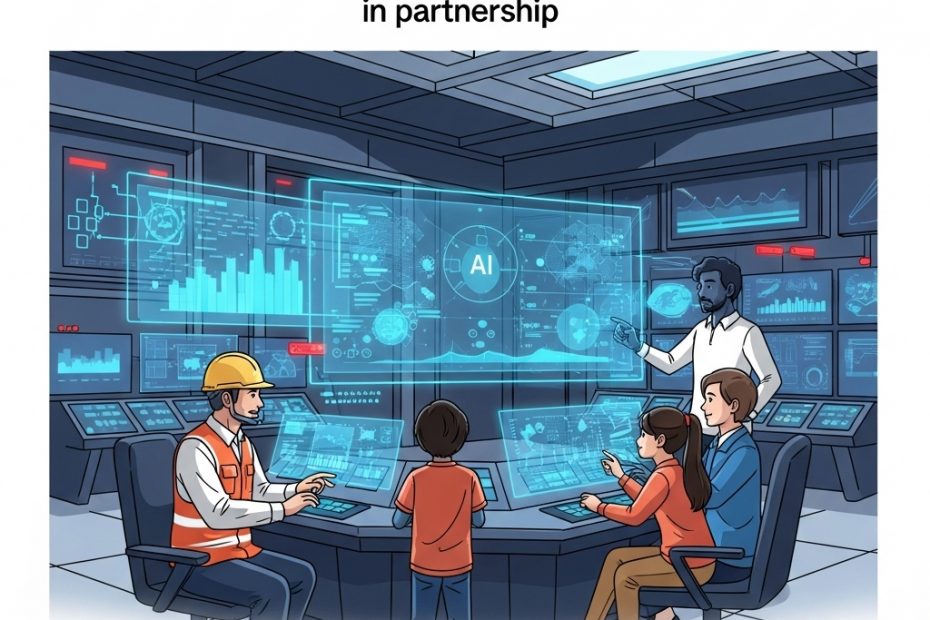
New Cyber security Guidance Paves the Way for AI in Critical Infrastructure.

Artificial intelligence is moving from the world of ideas into the heart of the systems that power modern life. From electricity and transportation to water treatment and manufacturing, AI is helping industries become more efficient and predictive. But with this progress comes a new challenge, how to use AI safely in systems that affect millions of lives.
Global cybersecurity agencies, including CISA, the FBI, the NSA, and Australia’s Cyber Security Centre, have come together to publish the first unified guidance on the secure use of AI in critical infrastructure. The document, titled Principles for the Secure Integration of Artificial Intelligence in Operational Technology, represents a turning point for cybersecurity and safety. It provides practical, real-world direction for operators who are integrating AI into essential services.
The guidance acknowledges AI’s potential to transform operations while warning about the risks of relying on it too heavily. It draws a clear line between safety and security—two ideas that are often confused. Security focuses on protecting systems from cyber threats, while safety ensures that the technology does not cause physical harm. AI, especially large language models, can behave unpredictably or “hallucinate,” making it unsuitable for making safety-critical decisions. Instead, AI should assist human operators, not replace them.
For instance, an AI system in a power plant might analyze data from turbines and recommend an adjustment, but if it misreads the data, the result could damage equipment or threaten worker safety. The guidance emphasizes that humans must always validate AI’s suggestions with independent checks. This partnership ensures that technology enhances, rather than undermines, safety.
The report also introduces strong architectural recommendations. Agencies advise using “push-based” systems that allow AI to analyze summaries of operational data without having direct control or inbound access to core systems. This setup prevents cybercriminals from exploiting AI connections to infiltrate critical networks.
Beyond technical design, the guidance highlights a human challenge, maintaining expertise. As industries automate, experienced operators are retiring, and younger staff may rely too much on digital tools. The guidance encourages organizations to preserve manual skills and ensure teams are trained to question and verify AI-generated outputs.
Another key message is transparency. Many companies are finding that AI is being built into tools and platforms without clear disclosure. The new framework urges organizations to demand clarity from vendors, requiring them to share details about model training data, storage, and how AI is embedded in products. This transparency helps organizations make informed decisions before adopting new technologies.
Above all, the document reinforces that accountability lies with people. Humans remain responsible for ensuring that systems function safely. The best results come when people and AI work together, combining human intuition with machine precision. This new guidance gives the world a map for doing just that—building resilience by pairing human oversight with technological progress.
Stay Smart. Stay Secure. Stay Cyber-Aware. Follow us on Instagram @smartteacheronline for practical, family-friendly cyber tips and weekly updates.

Artificial Intelligence is rapidly changing the world – Are you READY for it?

Artificial intelligence is no longer a futuristic idea, it is a force that is already transforming how we live, work, and learn. Between 2026 and 2030, AI will play an even bigger role in shaping the global job market and redefining the skills people need to succeed. While some worry that machines will take over human jobs, experts believe AI will actually create more opportunities than it replaces. The key will be learning how to adapt.
Companies like Google and Microsoft have already built AI systems that handle data entry, analysis, and content creation. Tools such as ChatGPT, Gamma, and Numerous other AI tools are changing how people work and communicate. These technologies are not just reshaping offices, they are influencing schools, homes, and even personal lives. The truth is that AI is here to stay, and those who learn how to use it will have a major advantage in the years ahead.
According to global studies, AI could add around $13 trillion to the world’s economy by 2030. That means new industries, new roles, and a demand for new skills. Jobs that involve repetitive or routine work, like customer service, accounting, and reception, will likely be automated. However, jobs that rely on creativity, emotional intelligence, or leadership will become even more important. Teachers, psychologists, HR managers, and executives will remain essential because their work depends on human judgment and connection, qualities AI cannot imitate.
Reports from the World Economic Forum estimate that AI could replace up to 85 million jobs by 2026 but will also create many new ones in data science, robotics, and software development. This shift means that the ability to learn continuously and adapt quickly will be critical. Workers will need to develop both technical and soft skills, including communication, teamwork, and problem-solving.
For families, this change means helping children prepare early. Parents can encourage their kids to explore technology, learn basic coding, and understand how AI works. Teachers, too, can play a key role in helping students develop the critical thinking and creativity needed to thrive in a digital world. For professionals, this means being open to new learning opportunities, attending AI-focused workshops, or even enrolling in online degree programs designed for future industries.
The future shaped by AI is not about humans versus machines, it is about collaboration. AI will handle repetitive work, while humans will focus on creativity, empathy, and innovation. Every industry will be affected, from healthcare to education to manufacturing. But those who embrace this change will not just survive, they will lead.
Artificial intelligence will redefine our world, and now is the time to prepare for it. Lifelong learning, adaptability, and curiosity will be the most valuable tools anyone can have in this new era.
Stay Smart. Stay Secure. Stay Cyber-Aware. Follow us on Instagram @smartteacheronline for practical, family-friendly cyber tips and weekly updates.

How Self-confidence and Self-awareness Builds the Foundation for a Child’s Growth.

Every child’s journey toward success begins with two invisible tools, self-awareness and self-confidence. They may sound simple, but together, they shape how children see themselves, respond to challenges, and grow into emotionally healthy adults. As parents, teachers, and caregivers, nurturing these traits from an early age gives our children the foundation they need to thrive in school, relationships, and life.
Self-awareness means helping a child recognize who they are, their feelings, strengths, weaknesses, and the impact of their actions on others. A self-aware child knows when they’re happy, sad, frustrated, or scared, and can express it instead of acting out. It’s not about making them perfect; it’s about helping them understand themselves.
Parents can build self-awareness through open conversations. When your child throws a tantrum or seems upset, instead of saying, “Stop crying,” try asking, “What made you feel this way?” This small shift invites them to name their emotions, and naming emotions is the first step toward managing them. Teachers can do the same in classrooms by encouraging reflection. For example, asking “How did that test make you feel?” or “What do you think you did well in this project?” helps children connect their emotions to their actions and outcomes.
Self-awareness also helps children develop empathy. When they understand their own feelings, they begin to recognize similar feelings in others, which builds kindness and cooperation, values every community needs.
Nurturing Self-Confidence
Self-confidence, on the other hand, is the belief in one’s ability to succeed. A confident child feels capable of trying new things, even when they might fail. Confidence does not mean arrogance; it means security, the quiet inner voice that says, “I can do it.”
Parents and teachers play a huge role here. Confidence is built through consistent encouragement, positive reinforcement, and celebrating effort, not just results. When a child’s drawing is messy, instead of pointing out the flaws, you could say, “I like how you used so many colors!” This teaches them that trying is valuable.
Children also learn confidence by observing adults. When parents model self-belief, for example, by admitting mistakes and still trying again, kids learn resilience. The same applies to classrooms. A teacher who praises curiosity, effort, and teamwork creates a safe space for confidence to bloom.
How do they work together?
Self-awareness and self-confidence are two sides of the same coin. When children know who they are, they become confident in expressing themselves. When they are confident, they are more willing to explore new aspects of themselves. Together, they produce emotionally intelligent, adaptable, and self-driven individuals, qualities the world desperately needs.
Our Final Thoughts.
Raising a child with self-awareness and confidence takes patience, but it’s worth every effort. Talk to them. Listen to them. Let them try, fail, and try again. Remind them they are enough, and that every mistake is just another lesson on their path to growth.
Follow us on Instagram @smartteacheronline for more parenting insights, classroom tips, and practical guides to raising confident, emotionally intelligent children.

Microsoft Uncovers ‘Whisper Leak’ Attack That Can Identify Chat Topics in Encrypted AI Conversations.

Artificial intelligence tools like ChatGPT have become a regular part of modern life, helping students with assignments, parents with planning, and professionals with their work. But new research from Microsoft has revealed that even encrypted conversations with these AI tools may not be completely private. The company’s cybersecurity team recently uncovered a new type of cyberattack called Whisper Leak, which can allow attackers to guess what people are discussing with AI chatbots by analyzing encrypted traffic patterns.
At first glance, this sounds impossible. After all, encrypted chats are supposed to be secure. However, Microsoft researchers discovered that while attackers cannot read the exact words exchanged, they can still analyze the size and timing of the data packets moving between the user and the chatbot. By studying these patterns, attackers can train systems to predict when someone is talking about certain topics, such as politics, financial crimes, or other sensitive matters. It’s similar to listening to a conversation without hearing the words but still figuring out the subject from the rhythm and tone.
This vulnerability targets something called model streaming, a feature that allows AI chatbots to respond gradually as they generate answers. While this makes responses appear faster and more natural, it also gives attackers more data to analyze. Microsoft’s proof-of-concept testing showed that trained machine learning models could predict the topics of encrypted AI conversations with accuracy rates above 98 percent. Many popular models, including those from Microsoft, OpenAI, Mistral, Alibaba, and xAI, were affected. Google and Amazon models were slightly more resistant but still not immune.
The danger grows over time. The more data an attacker collects, the more accurate their systems become, turning Whisper Leak into a realistic and ongoing privacy risk. Microsoft warned that anyone with access to network traffic, such as someone sharing your Wi-Fi or even an internet service provider, could potentially use this method to track what you discuss with an AI assistant.
To counter this, major AI companies have started implementing fixes. One approach is to randomize the length of chatbot responses, making it harder to detect patterns. Microsoft also recommends that users avoid discussing highly sensitive topics when connected to public Wi-Fi, use VPNs for extra protection, and choose non-streaming chatbot options when privacy is essential.
For families, this discovery reinforces the importance of digital awareness. Parents and children need to understand that while AI tools are useful, they are not completely private. Kids should be encouraged to avoid sharing personal or sensitive information in chats. For professionals, it’s a reminder that confidential work-related topics should not be discussed through AI chatbots unless the platform has strict privacy controls.
The Whisper Leak attack is a wake-up call about the hidden risks of AI communication. It doesn’t mean we should stop using AI, it means we must use it wisely and stay alert.
Stay Smart. Stay Secure. Stay Cyber-Aware. Follow us on Instagram @smartteacheronline for practical, family-friendly cyber tips and weekly updates.

When AI Gets Tricked: Here’s What New ChatGPT Vulnerabilities Teach Us about Staying Safe Online.

Artificial intelligence has become part of everyday life, in our homes, our schools, and even our workplaces. Kids use it to get homework help, parents use it to plan budgets or manage schedules, and professionals rely on it for fast research, writing support, or problem-solving. But with technology growing this quickly, it’s easy to forget something important: even the smartest systems can be tricked. And when they are, the people who pay the price are the everyday users who trust them.
That’s exactly what happened recently when cybersecurity researchers discovered seven vulnerabilities affecting ChatGPT’s latest models, GPT-4o and GPT-5. These weaknesses weren’t minor bugs. They were serious loopholes that could allow attackers to secretly manipulate the AI and potentially access personal information from users’ chat histories or the new memory feature, all without users touching anything suspicious.
In simple terms, the researchers found ways that attackers could hide harmful instructions inside normal websites, social posts, or even a simple search query. Then, when ChatGPT reads or summarizes those websites, it accidentally follows the attacker’s hidden instructions instead of yours. Some attacks required just one click. Others required no click at all. That’s what makes this discovery so concerning. It shows how incredibly easy it is for people with bad intentions to influence the way AI tools behave, even when you think you’re using them safely.
For families, this research hits close to home. Kids and teens often trust AI tools without question. They assume the information given is correct, helpful, and private. Parents rely on AI for everyday tasks, from organizing family life to working remotely. And professionals use these tools for everything from writing emails to analyzing data. When the AI itself can be manipulated, it creates a hidden risk that affects everyone, regardless of age or tech experience.
What stands out most in this discovery is how normal the entry points look. A harmless-looking website. A basic link. A simple request: “ChatGPT, summarize this for me.” That’s all it takes for attackers to sneak in. One of the most concerning issues researchers found is something called memory poisoning , where hidden instructions get stored inside ChatGPT’s long-term memory and influence future responses. Imagine your digital helper learning the wrong thing and carrying that error into future conversations. That’s the kind of subtle risk most people never think about.
But here’s the part that matters most: awareness is protection. Understanding how these attacks work helps parents guide their kids, helps professionals use AI responsibly, and helps young people build healthy digital habits. This discovery isn’t a reason to fear AI, it’s a reminder to use it wisely. Don’t share private details. Don’t click unfamiliar links. Teach kids that AI is a tool, not a diary. And stay updated as technology evolves.
Artificial intelligence is powerful, exciting, and full of opportunity. But like everything in the digital world, it works best when users are informed. Staying cyber-aware isn’t just a skill anymore, it’s a life necessity for families and future-ready learners alike.

YouTube’s Dark Side: How 3,000 Fake Videos Are Stealing Your Data Right Now.

Thousands of YouTube videos are actively stealing personal data through an elaborate scam network that’s been operating since 2021, and your family might be next.
Security researchers have uncovered what they’re calling the “YouTube Ghost Network,” a massive malware operation involving over 3,000 malicious videos designed to trick users into downloading data-stealing software. What makes this particularly dangerous is that these aren’t obvious scams from sketchy new accounts. Cybercriminals are hijacking established YouTube channels, some with hundreds of thousands of subscribers, and transforming them into malware distribution hubs that look completely legitimate.
The operation works with frightening sophistication. Attackers use three types of accounts working in coordination: video accounts that upload fake tutorials, post accounts that spam community tabs with malicious links, and interact accounts that leave encouraging comments and likes to create a false sense of trust. This organized structure means that even when accounts get banned, they’re immediately replaced without disrupting the overall operation.
The videos typically target people searching for free premium software, game cheats (especially for Roblox), or cracked versions of expensive programs, making young people particularly vulnerable. These fake tutorials look professional, rack up hundreds of thousands of views, and are surrounded by seemingly genuine positive feedback. One hijacked channel called @Afonesio1, with 129,000 subscribers, was compromised twice just to spread this malware.
What’s actually being distributed is serious stuff. Families who fall for these traps end up infected with “stealers”, specialized malware like Lumma Stealer, Rhadamanthys, and RedLine that specifically target passwords, banking information, and personal data. The criminals cleverly hide their malicious links behind trusted platforms like Google Drive, Dropbox, and MediaFire, or create convincing phishing pages on Google Sites and Blogger. They even use URL shorteners to mask where links actually lead.
The scale of this operation has tripled since the start of this year alone, and it represents a disturbing evolution in how cybercriminals operate. They’re weaponizing the engagement tools and trust signals that make social media work, views, likes, comments, subscriber counts, to make dangerous content appear safe.
For families, this is a wake-up call. Parents need to have honest conversations with their kids about why “free” premium software is almost always a trap. Children and teens need to understand that high view counts don’t guarantee safety, and those encouraging comments are likely from fake accounts. Everyone should remember the golden rule: never download software from YouTube video descriptions.
The cybersecurity lesson here is clear, trust, but verify. That helpful tutorial might look polished and professional, but it could be a carefully crafted trap designed to steal your most sensitive information. As one security expert noted, threat actors are now leveraging “the trust inherent in legitimate accounts and the engagement mechanisms of popular platforms to orchestrate large-scale, persistent, and highly effective malware campaigns.”
In an age where YouTube is often the first place people turn to learn new skills or find solutions, staying skeptical and informed isn’t just smart, it’s essential for protecting your digital life.

Amazon Says Goodbye to 14,000 Corporate Jobs, but There’s More to the Story.

It’s the first week of November, and while most of us are settling into the calm rhythm of a new month, something big is stirring inside one of the world’s largest companies.
Amazon, yes, the same company that delivers your favorite books, gadgets, and late-night snack orders—is saying goodbye to 14,000 corporate workers. But before you panic or picture a sad parade of cardboard boxes and teary farewells, here’s the twist: Amazon isn’t collapsing. It’s transforming.
In a heartfelt note to staff, Beth Galetti, a senior vice president at the tech giant, explained that the company wants to become leaner, faster, and sharper. She said Amazon is reorganizing so it can take full advantage of the most powerful tool shaping our time, Artificial Intelligence.
AI, Galetti explained, is not just a buzzword. It’s the modern version of electricity, changing how every part of business and daily life works. From the way we shop to how we communicate, it’s already everywhere. And for Amazon, a company built on innovation, staying ahead means trimming unnecessary layers and investing in what truly matters.
It’s a bold move. After all, this announcement comes just months after Amazon reported an eye-popping $167 billion in quarterly sales, beating expectations across Wall Street. The company isn’t losing money, it’s re-shaping how it makes money.
For many workers, the news is bittersweet. Some will be offered new opportunities within Amazon. Others will receive support to transition into new careers. And while job cuts never come easy, Amazon insists this moment is about evolution, not elimination.
As CEO Andy Jassy shared earlier this year, “AI will mean fewer people doing some jobs, but more people doing new kinds of work.” That’s the delicate balance of progress, the same technology that automates one task creates an entirely new field in another.
Industry experts say the layoffs reflect a wider truth: companies everywhere are rewriting the playbook. Automation and AI are changing the workforce at lightning speed, and even tech giants aren’t immune to reinvention.
For us at Smart Teacher, this story isn’t just about corporate restructuring, it’s about learning to adapt. Whether you’re a student discovering coding, a parent guiding your child through career choices, or a professional curious about AI’s impact on work, the message is clear: the future belongs to the adaptable.
Because when technology moves fast, standing still isn’t safe, it’s standing still that makes you obsolete.
So, Smart Learners, as November unfolds, remember this: every shift in the world of work is also a signal for us to upgrade our own skills, our mindset, and our curiosity. Because the smartest companies, and the smartest people, never stop learning.

9 CYBERSECURITY TRENDS IN 2025

2025 has been quite the year for cybersecurity, and honestly? Things got pretty intense. Whether you’re a parent trying to keep your kids safe online or a young person learning about digital security, you need to know what has been happening this year. Don’t worry, because we’re breaking it all down in plain English, no tech jargon overload. Let’s jump right in. 1. AI Became a Double-Edged Sword Here’s the thing about artificial intelligence: it’s everywhere now, and it’s making… 

Welcome to 👋
Smart Teacher Platform.

Get simple parenting tips, fun Yoruba learning ideas, and cyber safety guidance to help your child learn better without pressure.

We don’t spam! Read our privacy policy for more info.