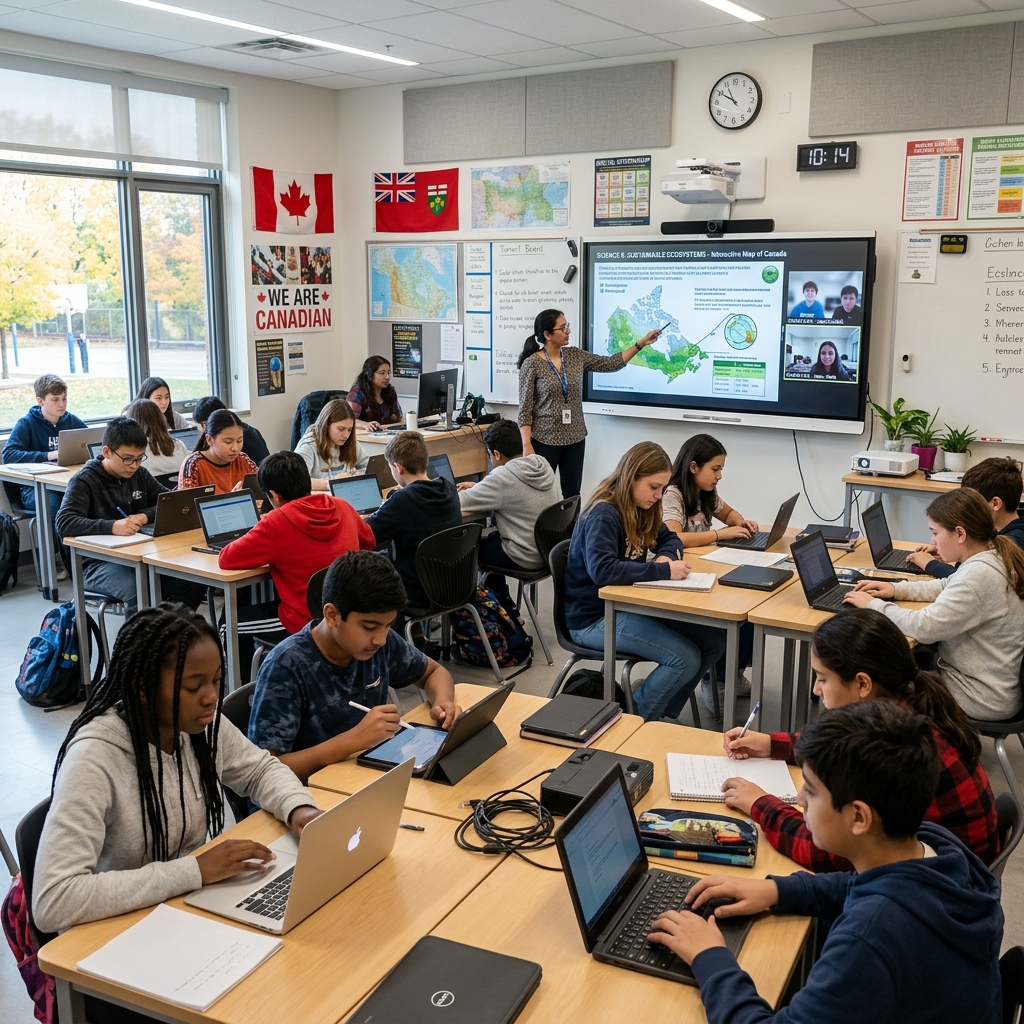
Canada’s education system is experiencing a structural shift that is redefining how teaching and learning take place. Over the past decade, and especially after the COVID-19 pandemic, digital classrooms have moved from being supplementary tools to becoming essential components of modern education.
In many Canadian provinces such as Ontario, British Columbia, and Alberta, schools have integrated hybrid learning systems that allow students to attend classes both physically and virtually. This has significantly expanded access to education, particularly for students in remote or rural areas where traditional schooling resources may be limited.
Digital platforms such as Google Classroom, Microsoft Teams for Education, and AI-powered tutoring systems are now widely used in Canadian schools. These tools help teachers distribute assignments, track student performance, and provide real-time feedback. More importantly, they allow for personalized learning experiences where students can learn at their own pace.
However, the transition has not been seamless. One of the biggest challenges facing Canadian educators is the digital divide. While urban schools are equipped with high-speed internet and modern devices, many rural communities still struggle with poor connectivity and outdated infrastructure. This imbalance raises concerns about equality in education access across the country.
Another major factor is teacher readiness. Many educators were trained in traditional classroom settings and now find themselves adapting to rapidly evolving technologies. As a result, professional development and continuous training have become essential in ensuring that teachers can effectively use digital tools without feeling overwhelmed.
Despite these challenges, the benefits are undeniable. Studies show that students in blended learning environments tend to perform better in subjects that incorporate interactive content, multimedia resources, and adaptive assessments. Engagement levels also increase when students are given more autonomy over how they learn.
Looking ahead, Canada’s education system is expected to further integrate artificial intelligence, data-driven learning analytics, and virtual reality classrooms. These innovations will not replace teachers but rather enhance their ability to deliver more impactful and personalized education.
The future of teaching in Canada is not just digital—it is adaptive, inclusive, and increasingly student-centered.