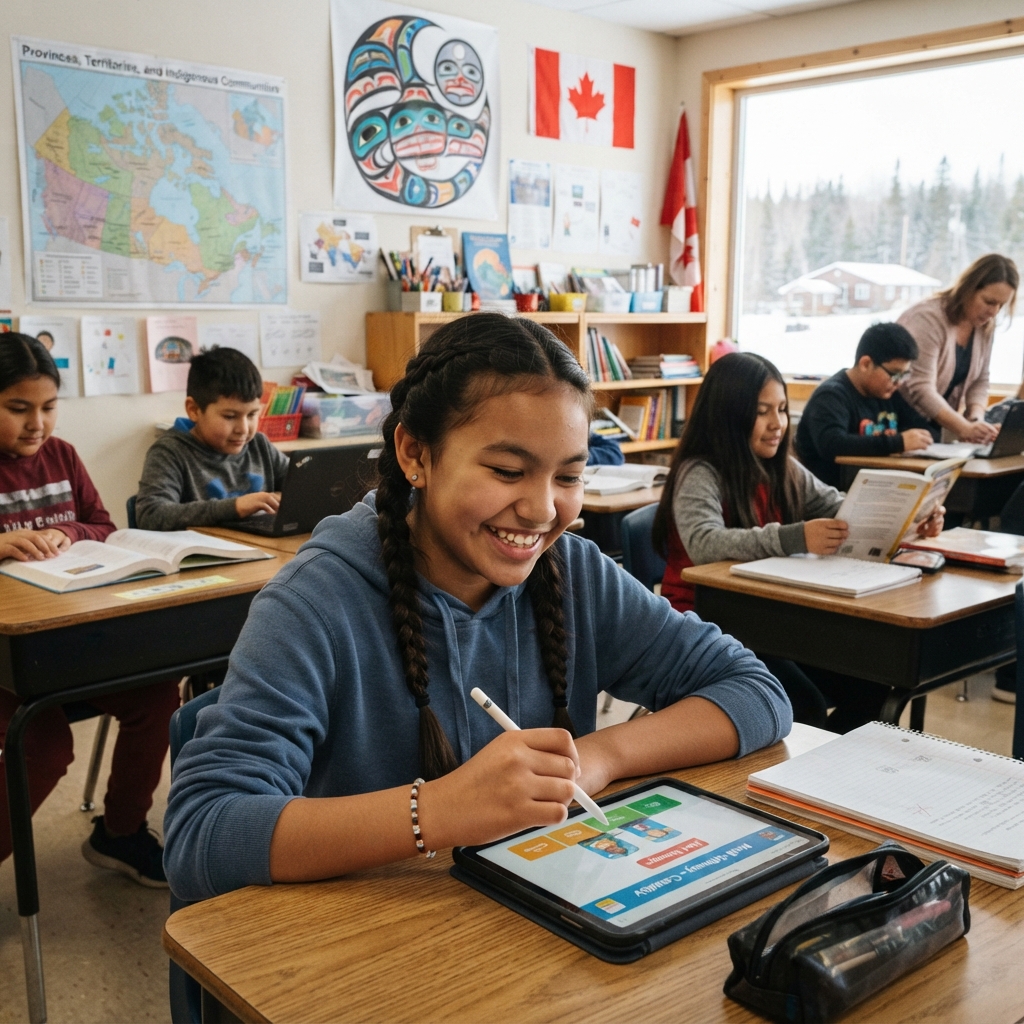
Hello smart friends, teachers, and parents! Welcome to Smart Teacher Online. In Canada, the promise of quality education for every child is increasingly shaped by technology, yet the digital divide remains a significant barrier. This divide refers to unequal access to computers, high-speed internet, devices, and digital skills, particularly affecting rural, remote, northern, and Indigenous communities compared to urban centres.
The challenges are well-documented. Rural households often have lower access to reliable broadband, with some reports showing only around 46% of rural areas enjoying high-speed internet compared to much higher rates in cities. Factors like vast geography, high infrastructure costs, affordability issues, and limited digital literacy training widen the gap. During remote learning periods, many students in remote regions struggled with connectivity, impacting learning continuity and widening achievement gaps. Indigenous communities and low-income families in both rural and urban areas face additional barriers related to the affordability and cultural relevance of tools.
Fortunately, Canada is making strides. Federal and provincial initiatives, including programs supported by organizations like CIRA and partnerships for broadband expansion in rural and northern regions, are helping. Provinces are investing in devices, teacher training, and inclusive platforms. Offline-capable and low-bandwidth tools, along with solar or resilient tech solutions, are being explored to serve remote schools.
To truly bridge the divide, a comprehensive approach is needed:
- Expand reliable broadband and provide subsidized devices for underserved areas.
- Offer ongoing, practical digital literacy programs for teachers and families.
- Develop community learning hubs in libraries or community centres for shared access.
- Prioritize culturally relevant and multilingual content, especially for Indigenous learners.
Strong cybersecurity practices, such as parental controls, privacy education, and safe platform use, are essential. Parents can support by supervising screen time and blending digital resources with offline activities. Teachers: Begin with accessible tools like Google Classroom or provincial learning management systems and advocate for better infrastructure in your schools.
Bridging Canada’s digital divide is about equity and opportunity. By closing this gap, we empower every child, from urban Toronto to remote Nunavut, to thrive in a digital world and build a stronger, more inclusive future for the country.