Skip to content

Artificial Intelligence is rapidly changing the world – Are you READY for it?

Artificial intelligence is no longer a futuristic idea, it is a force that is already transforming how we live, work, and learn. Between 2026 and 2030, AI will play an even bigger role in shaping the global job market and redefining the skills people need to succeed. While some worry that machines will take over human jobs, experts believe AI will actually create more opportunities than it replaces. The key will be learning how to adapt.
Companies like Google and Microsoft have already built AI systems that handle data entry, analysis, and content creation. Tools such as ChatGPT, Gamma, and Numerous other AI tools are changing how people work and communicate. These technologies are not just reshaping offices, they are influencing schools, homes, and even personal lives. The truth is that AI is here to stay, and those who learn how to use it will have a major advantage in the years ahead.
According to global studies, AI could add around $13 trillion to the world’s economy by 2030. That means new industries, new roles, and a demand for new skills. Jobs that involve repetitive or routine work, like customer service, accounting, and reception, will likely be automated. However, jobs that rely on creativity, emotional intelligence, or leadership will become even more important. Teachers, psychologists, HR managers, and executives will remain essential because their work depends on human judgment and connection, qualities AI cannot imitate.
Reports from the World Economic Forum estimate that AI could replace up to 85 million jobs by 2026 but will also create many new ones in data science, robotics, and software development. This shift means that the ability to learn continuously and adapt quickly will be critical. Workers will need to develop both technical and soft skills, including communication, teamwork, and problem-solving.
For families, this change means helping children prepare early. Parents can encourage their kids to explore technology, learn basic coding, and understand how AI works. Teachers, too, can play a key role in helping students develop the critical thinking and creativity needed to thrive in a digital world. For professionals, this means being open to new learning opportunities, attending AI-focused workshops, or even enrolling in online degree programs designed for future industries.
The future shaped by AI is not about humans versus machines, it is about collaboration. AI will handle repetitive work, while humans will focus on creativity, empathy, and innovation. Every industry will be affected, from healthcare to education to manufacturing. But those who embrace this change will not just survive, they will lead.
Artificial intelligence will redefine our world, and now is the time to prepare for it. Lifelong learning, adaptability, and curiosity will be the most valuable tools anyone can have in this new era.
Stay Smart. Stay Secure. Stay Cyber-Aware. Follow us on Instagram @smartteacheronline for practical, family-friendly cyber tips and weekly updates.
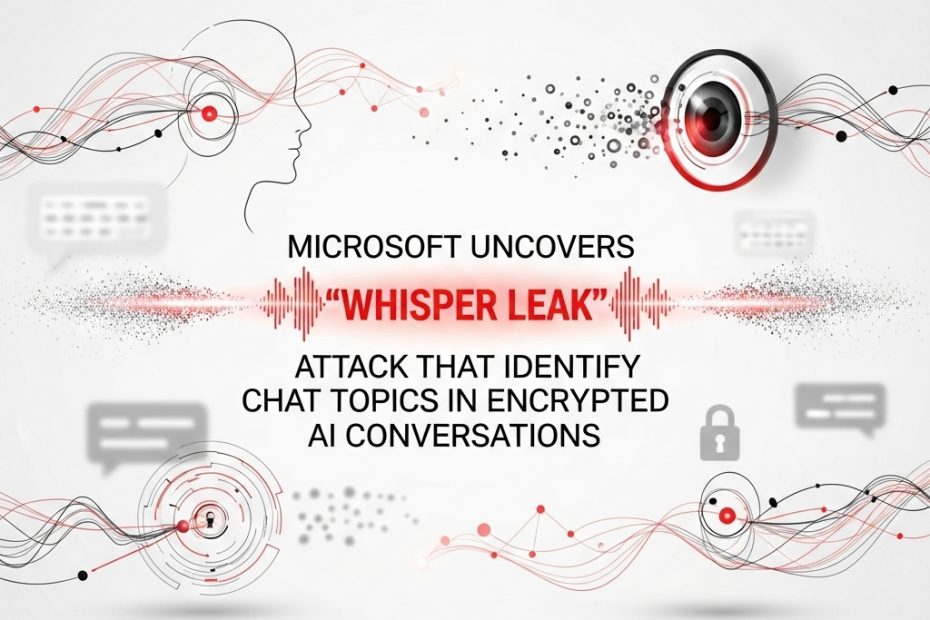
Microsoft Uncovers ‘Whisper Leak’ Attack That Can Identify Chat Topics in Encrypted AI Conversations.

Artificial intelligence tools like ChatGPT have become a regular part of modern life, helping students with assignments, parents with planning, and professionals with their work. But new research from Microsoft has revealed that even encrypted conversations with these AI tools may not be completely private. The company’s cybersecurity team recently uncovered a new type of cyberattack called Whisper Leak, which can allow attackers to guess what people are discussing with AI chatbots by analyzing encrypted traffic patterns.
At first glance, this sounds impossible. After all, encrypted chats are supposed to be secure. However, Microsoft researchers discovered that while attackers cannot read the exact words exchanged, they can still analyze the size and timing of the data packets moving between the user and the chatbot. By studying these patterns, attackers can train systems to predict when someone is talking about certain topics, such as politics, financial crimes, or other sensitive matters. It’s similar to listening to a conversation without hearing the words but still figuring out the subject from the rhythm and tone.
This vulnerability targets something called model streaming, a feature that allows AI chatbots to respond gradually as they generate answers. While this makes responses appear faster and more natural, it also gives attackers more data to analyze. Microsoft’s proof-of-concept testing showed that trained machine learning models could predict the topics of encrypted AI conversations with accuracy rates above 98 percent. Many popular models, including those from Microsoft, OpenAI, Mistral, Alibaba, and xAI, were affected. Google and Amazon models were slightly more resistant but still not immune.
The danger grows over time. The more data an attacker collects, the more accurate their systems become, turning Whisper Leak into a realistic and ongoing privacy risk. Microsoft warned that anyone with access to network traffic, such as someone sharing your Wi-Fi or even an internet service provider, could potentially use this method to track what you discuss with an AI assistant.
To counter this, major AI companies have started implementing fixes. One approach is to randomize the length of chatbot responses, making it harder to detect patterns. Microsoft also recommends that users avoid discussing highly sensitive topics when connected to public Wi-Fi, use VPNs for extra protection, and choose non-streaming chatbot options when privacy is essential.
For families, this discovery reinforces the importance of digital awareness. Parents and children need to understand that while AI tools are useful, they are not completely private. Kids should be encouraged to avoid sharing personal or sensitive information in chats. For professionals, it’s a reminder that confidential work-related topics should not be discussed through AI chatbots unless the platform has strict privacy controls.
The Whisper Leak attack is a wake-up call about the hidden risks of AI communication. It doesn’t mean we should stop using AI, it means we must use it wisely and stay alert.
Stay Smart. Stay Secure. Stay Cyber-Aware. Follow us on Instagram @smartteacheronline for practical, family-friendly cyber tips and weekly updates.
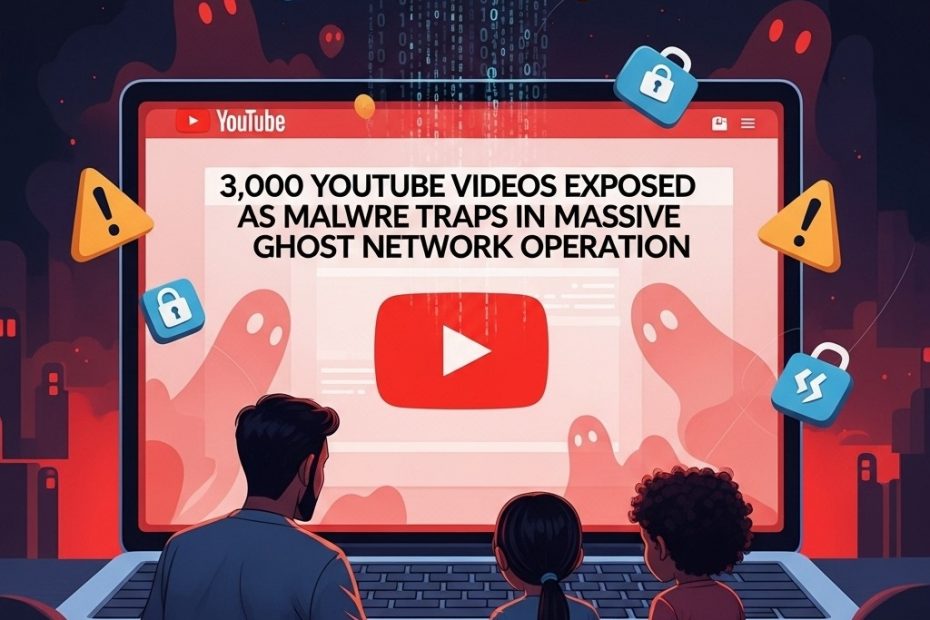
YouTube’s Dark Side: How 3,000 Fake Videos Are Stealing Your Data Right Now.

Thousands of YouTube videos are actively stealing personal data through an elaborate scam network that’s been operating since 2021, and your family might be next.
Security researchers have uncovered what they’re calling the “YouTube Ghost Network,” a massive malware operation involving over 3,000 malicious videos designed to trick users into downloading data-stealing software. What makes this particularly dangerous is that these aren’t obvious scams from sketchy new accounts. Cybercriminals are hijacking established YouTube channels, some with hundreds of thousands of subscribers, and transforming them into malware distribution hubs that look completely legitimate.
The operation works with frightening sophistication. Attackers use three types of accounts working in coordination: video accounts that upload fake tutorials, post accounts that spam community tabs with malicious links, and interact accounts that leave encouraging comments and likes to create a false sense of trust. This organized structure means that even when accounts get banned, they’re immediately replaced without disrupting the overall operation.
The videos typically target people searching for free premium software, game cheats (especially for Roblox), or cracked versions of expensive programs, making young people particularly vulnerable. These fake tutorials look professional, rack up hundreds of thousands of views, and are surrounded by seemingly genuine positive feedback. One hijacked channel called @Afonesio1, with 129,000 subscribers, was compromised twice just to spread this malware.
What’s actually being distributed is serious stuff. Families who fall for these traps end up infected with “stealers”, specialized malware like Lumma Stealer, Rhadamanthys, and RedLine that specifically target passwords, banking information, and personal data. The criminals cleverly hide their malicious links behind trusted platforms like Google Drive, Dropbox, and MediaFire, or create convincing phishing pages on Google Sites and Blogger. They even use URL shorteners to mask where links actually lead.
The scale of this operation has tripled since the start of this year alone, and it represents a disturbing evolution in how cybercriminals operate. They’re weaponizing the engagement tools and trust signals that make social media work, views, likes, comments, subscriber counts, to make dangerous content appear safe.
For families, this is a wake-up call. Parents need to have honest conversations with their kids about why “free” premium software is almost always a trap. Children and teens need to understand that high view counts don’t guarantee safety, and those encouraging comments are likely from fake accounts. Everyone should remember the golden rule: never download software from YouTube video descriptions.
The cybersecurity lesson here is clear, trust, but verify. That helpful tutorial might look polished and professional, but it could be a carefully crafted trap designed to steal your most sensitive information. As one security expert noted, threat actors are now leveraging “the trust inherent in legitimate accounts and the engagement mechanisms of popular platforms to orchestrate large-scale, persistent, and highly effective malware campaigns.”
In an age where YouTube is often the first place people turn to learn new skills or find solutions, staying skeptical and informed isn’t just smart, it’s essential for protecting your digital life.

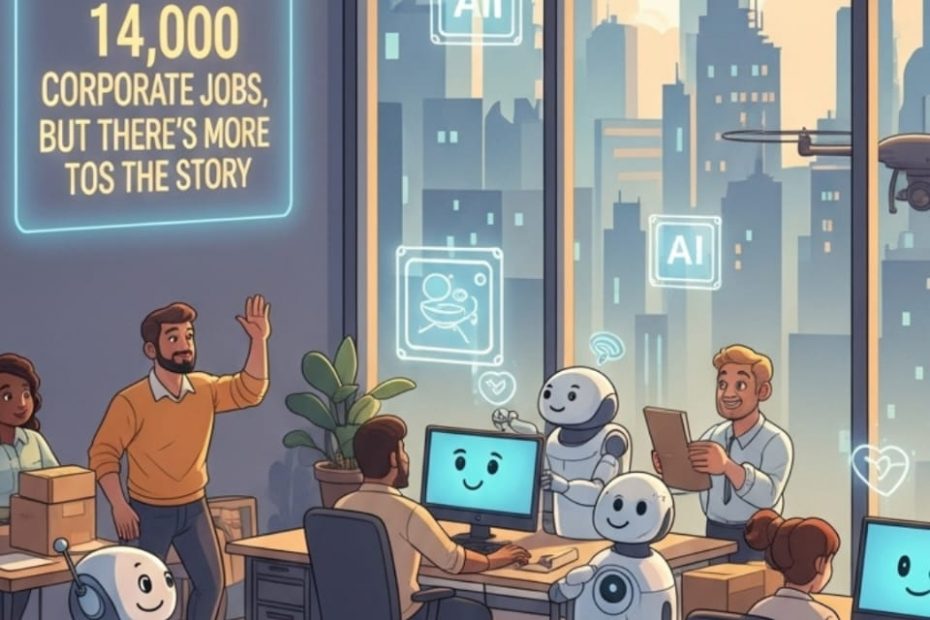
Amazon Says Goodbye to 14,000 Corporate Jobs, but There’s More to the Story.

It’s the first week of November, and while most of us are settling into the calm rhythm of a new month, something big is stirring inside one of the world’s largest companies.
Amazon, yes, the same company that delivers your favorite books, gadgets, and late-night snack orders—is saying goodbye to 14,000 corporate workers. But before you panic or picture a sad parade of cardboard boxes and teary farewells, here’s the twist: Amazon isn’t collapsing. It’s transforming.
In a heartfelt note to staff, Beth Galetti, a senior vice president at the tech giant, explained that the company wants to become leaner, faster, and sharper. She said Amazon is reorganizing so it can take full advantage of the most powerful tool shaping our time, Artificial Intelligence.
AI, Galetti explained, is not just a buzzword. It’s the modern version of electricity, changing how every part of business and daily life works. From the way we shop to how we communicate, it’s already everywhere. And for Amazon, a company built on innovation, staying ahead means trimming unnecessary layers and investing in what truly matters.
It’s a bold move. After all, this announcement comes just months after Amazon reported an eye-popping $167 billion in quarterly sales, beating expectations across Wall Street. The company isn’t losing money, it’s re-shaping how it makes money.
For many workers, the news is bittersweet. Some will be offered new opportunities within Amazon. Others will receive support to transition into new careers. And while job cuts never come easy, Amazon insists this moment is about evolution, not elimination.
As CEO Andy Jassy shared earlier this year, “AI will mean fewer people doing some jobs, but more people doing new kinds of work.” That’s the delicate balance of progress, the same technology that automates one task creates an entirely new field in another.
Industry experts say the layoffs reflect a wider truth: companies everywhere are rewriting the playbook. Automation and AI are changing the workforce at lightning speed, and even tech giants aren’t immune to reinvention.
For us at Smart Teacher, this story isn’t just about corporate restructuring, it’s about learning to adapt. Whether you’re a student discovering coding, a parent guiding your child through career choices, or a professional curious about AI’s impact on work, the message is clear: the future belongs to the adaptable.
Because when technology moves fast, standing still isn’t safe, it’s standing still that makes you obsolete.
So, Smart Learners, as November unfolds, remember this: every shift in the world of work is also a signal for us to upgrade our own skills, our mindset, and our curiosity. Because the smartest companies, and the smartest people, never stop learning.

9 CYBERSECURITY TRENDS IN 2025

2025 has been quite the year for cybersecurity, and honestly? Things got pretty intense. Whether you’re a parent trying to keep your kids safe online or a young person learning about digital security, you need to know what has been happening this year. Don’t worry, because we’re breaking it all down in plain English, no tech jargon overload. Let’s jump right in. 1. AI Became a Double-Edged Sword Here’s the thing about artificial intelligence: it’s everywhere now, and it’s making… 

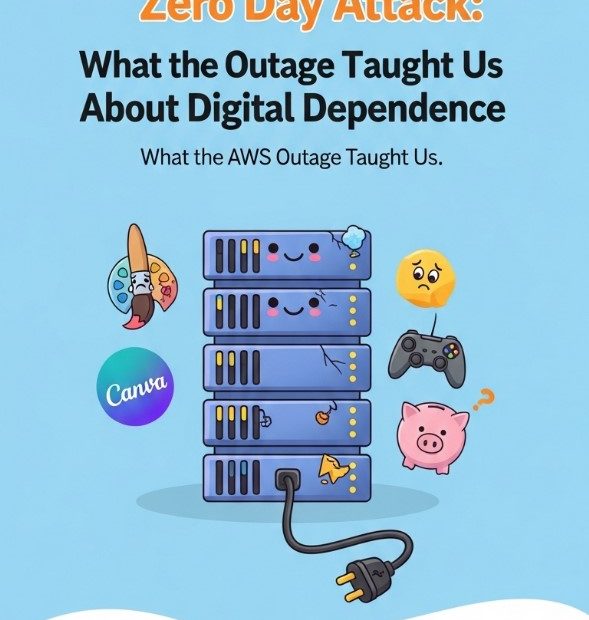
When the Internet Crashes: What the AWS Outage Taught Us About Online Dependence

It’s easy to think of the internet as this untouchable, ever-present force, but the truth is far more fragile. Most of what we do online, streaming, learning, gaming, communicating runs on invisible systems powered by companies like Amazon, Google, and Microsoft. In fact, these three control more than 60% of the global cloud infrastructure. So when one of them goes down, it’s not just a glitch, it’s a global event.

For a few hours, millions of people couldn’t work, play, or communicate as usual. Businesses lost transactions. Creators couldn’t access their files. Even financial platforms like PayPal’s Venmo and Chime faced disruptions. It was a reminder that the cloud, though powerful, isn’t infallible.

But here’s the silver lining: events like these open our eyes to the reality of digital dependency and why cyber awareness matters more than ever. Being cyber-aware isn’t just about avoiding scams or setting strong passwords; it’s about understanding the systems we rely on and preparing for moments when technology fails.

At Smart Teacher Platform, we believe every parent, student, and professional should understand the basics of digital safety and resilience. That starts with simple but powerful steps, knowing where your data lives, keeping backups, and protecting your online identity with strong, unique passwords and two-factor authentication (2FA). Because while we can’t control when a tech giant has a bad day, we can control how prepared we are when it happens.

This wasn’t just a tech story. It was a life lesson in digital awareness, one that affects us all, from classrooms to boardrooms, from designers to gamers. The more we understand the systems that shape our world, the better we can navigate them safely, smartly, and securely.

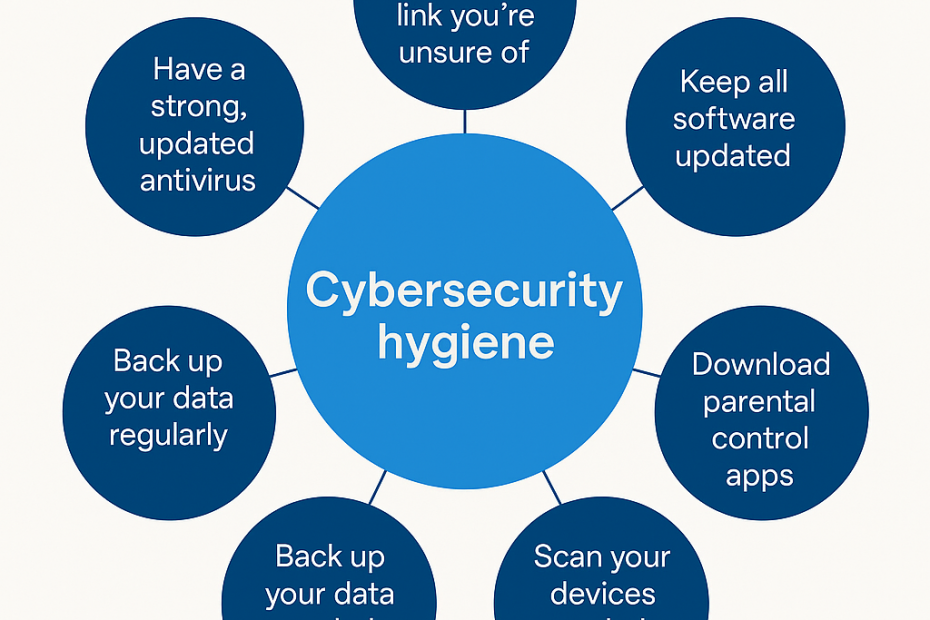
CYBERSECURITY HYGIENE

Recently, I got a call from someone complaining about how she woke up to find her device corrupted. She couldn’t boot it because the SSD was completely damaged.
I asked her a series of questions, and from what I deduced, she had downloaded several things from different sites and couldn’t even place her hand on the exact site or link that caused the corrupted file.

Read More…..