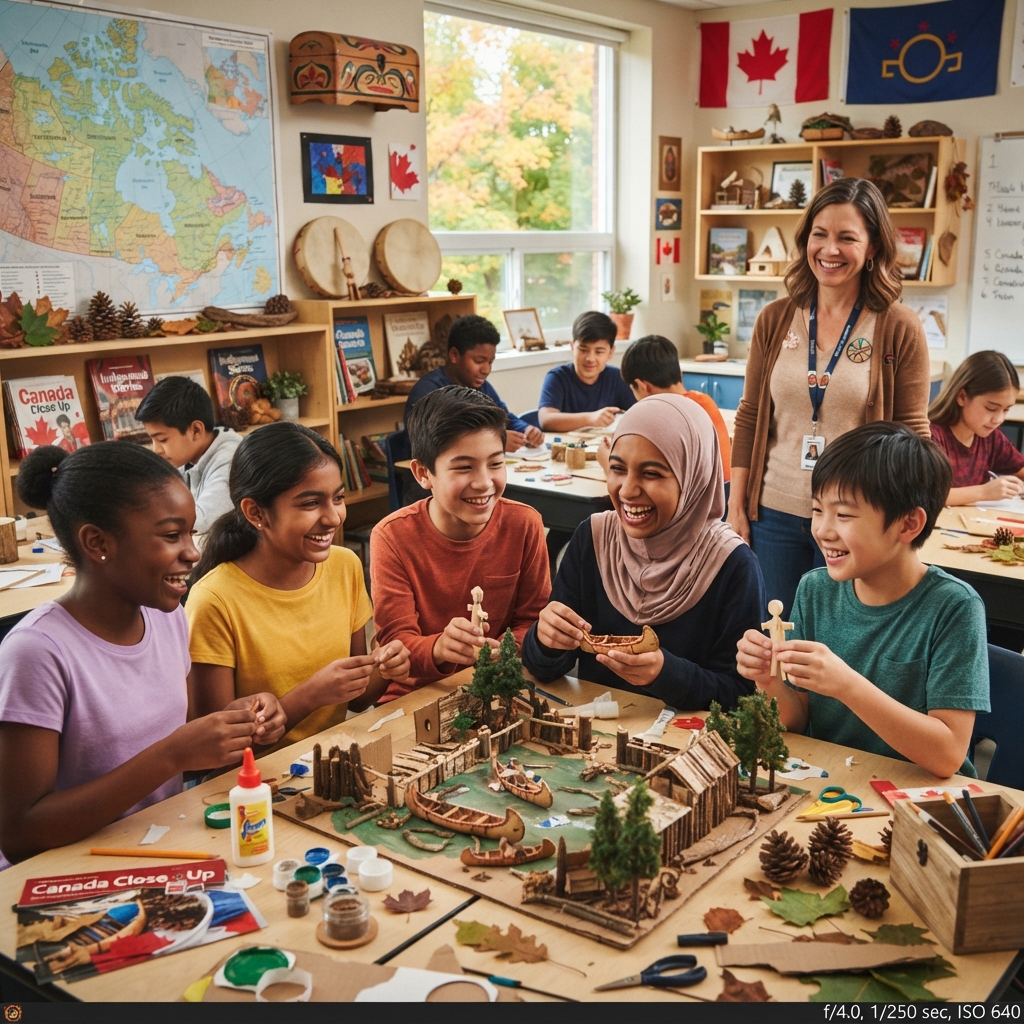
Who says learning can’t be engaging and meaningful? Storytelling and project-based learning (PBL) are two powerful, adaptable methods that are gaining traction in Canadian schools. Storytelling brings lessons to life through narratives, while PBL lets students tackle real-world challenges through extended projects.
These approaches improve engagement, knowledge retention, critical thinking, collaboration, and creativity. Canadian curricula in many provinces encourage inquiry and cross-curricular projects, making them a natural fit. Examples include students creating community impact projects on environmental issues, local history storytelling with Indigenous perspectives, or designing solutions for sustainable living.
Benefits are clear: students develop 21st-century skills while connecting learning to their lives and communities. Storytelling taps into Canada’s rich oral traditions, including Indigenous storytelling, making abstract concepts memorable.
Implementation tips:
- Start small with short stories or mini-projects aligned to curriculum outcomes.
- Ensure inclusivity by drawing on students’ diverse backgrounds.
- Combine methods: Use stories to launch projects and have students present outcomes creatively.
- Assess holistically, focusing on process, reflection, and skills alongside results.
Challenges like time constraints and varying provincial resources can be managed by aligning with existing expectations and using flexible grouping. Teachers: Involve students in topic selection. Parents: Extend projects with home discussions or local explorations.
Storytelling and project-based learning bring joy, relevance, and purpose to Canadian education. They help students become confident, innovative thinkers ready to contribute to society.