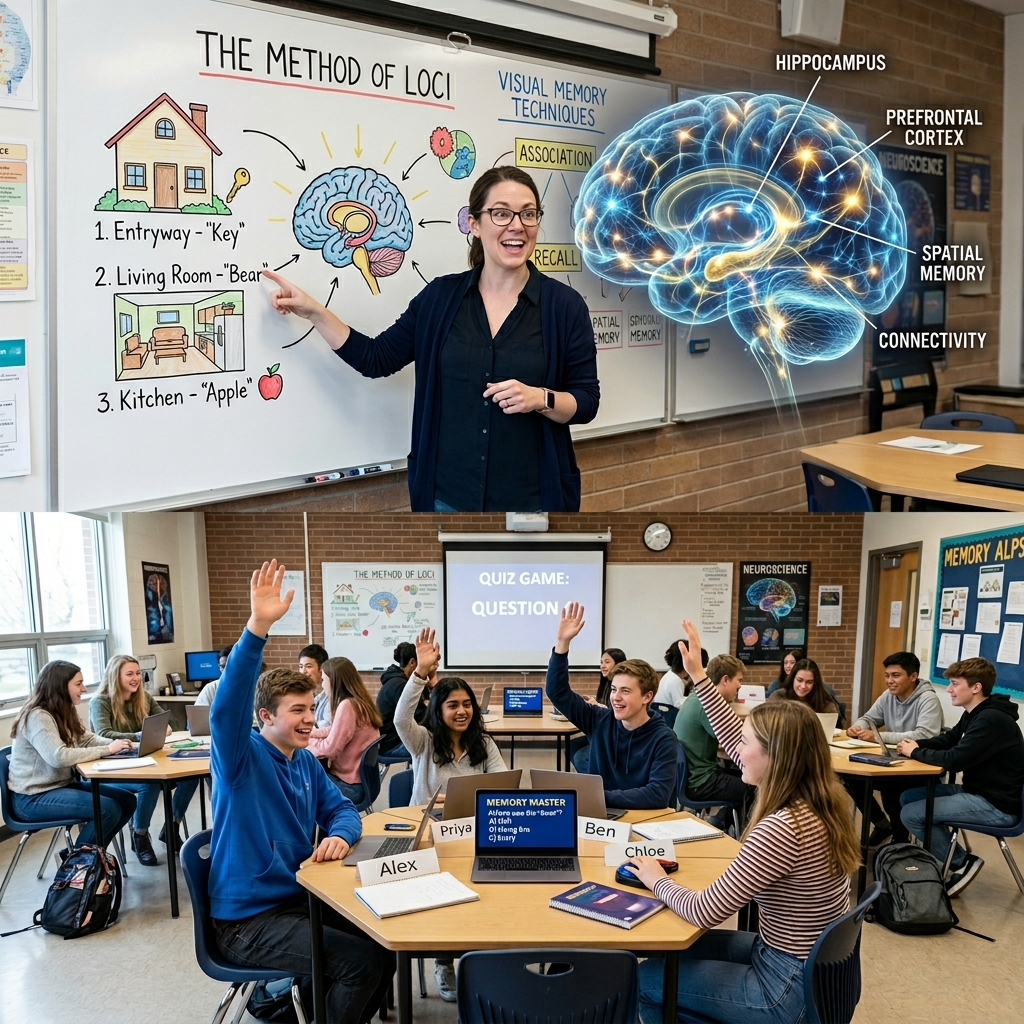
One of the most common frustrations in education is how quickly students forget what they have been taught. A student may understand a lesson perfectly during class, only to struggle with the same concept a few days later. This phenomenon is not a reflection of laziness or lack of ability—it is rooted in the natural limitations of human memory.
Research in cognitive psychology, particularly the work of Hermann Ebbinghaus and his “Forgetting Curve,” shows that the human brain rapidly loses new information if it is not reinforced. In fact, studies suggest that learners can forget up to 70% of new material within 24 to 72 hours if there is no revision or recall practice.
Traditional teaching methods often rely heavily on passive learning, where students listen, take notes, and rarely engage in active retrieval of information. This method is one of the key reasons retention rates remain low in many educational systems.
Modern educational research, however, has identified several powerful techniques that significantly improve memory retention. One of the most effective is active recall, which involves actively retrieving information from memory rather than simply rereading notes. For example, instead of reviewing a textbook chapter, students test themselves on what they remember.
Another highly effective method is spaced repetition, which involves revisiting information at increasing intervals over time. This technique strengthens neural pathways in the brain and helps transfer information from short-term to long-term memory.
Additionally, cognitive load theory plays a major role in how students learn. When too much information is presented at once, the brain becomes overwhelmed, making it harder to retain key concepts. Effective teachers break lessons into smaller, manageable chunks to improve comprehension.
Classroom engagement also plays a critical role. When students participate actively through discussions, quizzes, storytelling, or group activities, they are far more likely to remember the material.
Ultimately, improving student memory is not about forcing more study hours but about using smarter teaching methods that align with how the brain naturally processes information. Teachers who apply these strategies consistently can significantly improve academic outcomes and student confidence.