Skip to content

Could Canada Be the Next Country to Ban Social Media for Kids?

Social media has become a normal part of childhood for many families, but governments around the world are beginning to ask whether children are being exposed too early and at too great a cost. In Canada, this question is now at the center of a growing policy debate, as the federal government considers a possible ban on social media for children under the age of 14.

Canadian Culture Minister Marc Miller has confirmed that such a ban is being explored as part of broader online harm legislation. The move comes amid rising concern about how social media affects children’s mental health, safety, and development. From cyberbullying and online harassment to exposure to inappropriate content and addictive design features, parents and educators have long raised alarms about the risks children face online.

Canada is not alone in this conversation. Australia recently became the first country in the world to ban children under 16 from using social media platforms. That decision has sparked global discussion, with governments watching closely to see whether the policy will be effective in protecting young users. Canadian lawmakers are now examining similar approaches as they reconsider how best to safeguard children in digital spaces.

Parliament has spent several years studying online harms. Lawmakers have held multiple hearings focused on how social media platforms target young users and how easily children can be drawn into harmful online experiences. Since 2021, two versions of online safety legislation have been introduced but failed to pass. With increasing public concern and international examples to reference, the pressure to act is growing.

Technology companies, however, are pushing back against the idea of an outright ban. Many argue that enforcing age limits online is difficult, as current systems for age verification are often unreliable. Companies like Meta have suggested shifting responsibility to app stores, where Google and Apple could verify ages and require parental consent before allowing children to download social media apps.

For parents, this ongoing debate highlights an important reality. Regardless of whether a ban becomes law, children need guidance, boundaries, and education when it comes to social media use. Laws can help set limits, but they cannot replace conversations at home, parental involvement, and digital literacy.

For children, the discussion is a reminder that online spaces are not always designed with their well-being in mind. Social media platforms are built to capture attention and encourage constant engagement, which can affect self-esteem, sleep, and emotional health.

As Canada weighs its options, families are encouraged to stay informed and proactive. Understanding the risks, setting clear rules, and maintaining open communication can help children navigate the online world more safely, regardless of what legislation is eventually passed.

CYBERBULLYING and it’s effects on young people.

Cyberbullying has changed the way bullying affects young people. In the past, bullying often ended when a child left school. Today, it can follow them home through phones, social media, and messaging apps, making it almost impossible to escape. The emotional damage caused by cyberbullying can be severe, especially when it goes unnoticed for long periods.

Sophie was just 14 when her teacher, Ethan, noticed something was wrong. She had become withdrawn in class, avoided her phone, and seemed distracted and uninterested in her schoolwork. These changes may not seem alarming on their own, but together they formed a pattern that Ethan recognized as a sign of distress.

Like many teenagers, Sophie found it hard to talk about what she was going through. Fear and embarrassment kept her silent. When Ethan involved her parents, they slowly learned that Sophie was being bullied by her peers, both at school and online.

What made Sophie a target was something many children experience. She wore glasses because of myopia. For years, it had not mattered. Then suddenly, classmates began mocking her appearance. The teasing spread quickly and turned cruel. Sophie lost friends and became isolated, labeled as “different.”

The bullying became far more dangerous when it moved online. Former friends created a fake social media group designed to humiliate her. The group grew rapidly, and Sophie was tagged in hateful posts and sent abusive messages. She was threatened with the exposure of private messages and false rumors if she spoke out. The bullying continued for months, silently damaging her mental health.

By the time adults intervened, Sophie had begun self-harming. This moment highlighted how deeply cyberbullying can affect a young person when it is hidden and unresolved. With support from her teacher and parents, the fake accounts were reported, the bullying stopped, and steps were taken to prevent it from happening again.

Today, Sophie is confident, resilient, and preparing for college. Her story reminds us that cyberbullying is serious, but it is not unstoppable. Early attention, open communication, and teamwork between parents, teachers, and schools can protect children and help them heal.

BEFORE GETTING THAT GADGET FOR YOUR TEENAGER, CONSIDER THESE FIRST!

The moment a parent hands a teenager their first serious gadget often feels bigger than it looks. It is not just a phone or a laptop. It is a quiet transition. A step toward independence. A signal of trust. For many families, this moment comes with excitement, hesitation, and a long list of questions that rarely have simple answers.

Teenagers today live in a world where technology is everywhere. School assignments are submitted online. Friendships are maintained through messages and social platforms. Information is available at the tap of a screen. It is no surprise that many parents feel pressure to buy devices earlier than they planned, especially when everyone around them seems to be doing the same. But giving a teenager a gadget is not a decision to rush. It deserves thought, conversation, and clarity.

Before any device changes hands, one question matters more than the brand or the model. Is this teenager ready? Readiness has very little to do with age and everything to do with maturity. Some teenagers can manage screen time, respect boundaries, and communicate openly about what they encounter online. Others may still struggle with impulse control or emotional regulation. A device connected to the internet opens doors to learning and creativity, but it also opens doors to content, conversations, and pressures that can be overwhelming without guidance.

Many parents underestimate how quickly a gadget becomes part of a teenager’s emotional world. It can shift routines, affect sleep, change attention spans, and influence self-esteem. Once exposure begins, it is difficult to reverse. That is why it is important for parents to slow down and consider not just what their teenager wants, but what they truly need at this stage of development.

Clear rules are another part of the conversation that cannot be skipped. Devices without boundaries often create confusion and conflict. Teenagers need structure, even when they push against it. Talking openly about screen time, online safety, social media behavior, and consequences builds trust and prevents misunderstandings. When expectations are clear from the beginning, teenagers are more likely to use their devices responsibly.

Parental involvement does not end once the device is handed over. Monitoring, guidance, and regular check-ins are essential. This is not about control or surveillance. It is about protection and partnership. Teenagers are learning how to navigate a digital world that even adults are still figuring out. They need support, not silence.

Finally, gadgets can be powerful tools for building responsibility when used intentionally. Involving teenagers in decisions about data usage, care of the device, and balanced routines teaches accountability. Encouraging offline activities, face-to-face relationships, and downtime reminds them that technology is a tool, not a replacement for real life.

Giving a teenager a gadget is not just a purchase. It is a parenting decision that shapes habits, values, and trust. When handled thoughtfully, it can become a positive step forward rather than a source of regret.

A Christmas Day Message from All of Us at Smart Teacher Platform.

Christmas Day has a special way of bringing people together, no matter how busy life has been. It is a day that encourages us to pause, reflect, and appreciate the moments that truly matter. At Smart Teacher Platform, we believe Christmas is not just about celebration, but about connection, gratitude, and hope for the days ahead.

Today, we want to send warm wishes to everyone who is part of our community. Whether you are waking up to a house filled with excitement, enjoying a quiet morning, or spending the day thinking of loved ones near and far, we hope Christmas meets you with peace. The beauty of this day is that it does not demand perfection. It simply asks us to be present and to cherish the small, meaningful moments.

This season is often filled with traditions that remind us of comfort and familiarity. Shared meals, favorite songs, thoughtful messages, and simple gestures all come together to create lasting memories. Even in the midst of challenges, Christmas carries a message of renewal and reassurance. It reminds us that kindness still matters, connection still matters, and hope is always worth holding onto.

We are deeply grateful for the readers who have supported Smart Teacher Platform throughout the year. Your presence has helped build a community centered on learning, growth, and positive impact. Knowing that our words reach homes, families, and individuals across different places is something we do not take lightly.

As the year begins to close, Christmas offers a chance to rest before stepping into something new. It is a moment to reset, reflect, and look ahead with optimism. We hope you give yourself permission to slow down today, to enjoy the people around you, and to carry the warmth of this season into the coming year.

From everyone at Smart Teacher Platform, we wish you a joyful and peaceful Christmas. May your day be filled with light, laughter, and moments that stay with you long after the holiday ends.

Follow us on Instagram @smartteacheronline for updates, stories, and moments we share all year round.

To our Smart Teacher online community? We say Thank You!

As Christmas approaches, it feels like the perfect time to pause and reflect on the journey we have shared together at Smart Teacher Platform. The holiday season invites us to slow down, look back with gratitude, and appreciate the people and moments that made the year meaningful. For us, that begins with you, our readers, who have been with us from the early days of this blog until now.

When Smart Teacher Platform was first created, it was built around a simple idea: cybersecurity awareness should be easy to understand and relevant to everyday life. We wanted parents to feel confident guiding their children online, kids to feel informed rather than afraid, and professionals to stay updated without feeling overwhelmed. Seeing this vision resonate with so many of you has been incredibly rewarding. Your continued support, engagement, and trust have been the foundation of our growth.

Throughout the year, we tackled important and sometimes complex topics together. We discussed online scams, data breaches, AI risks, privacy concerns, and the small digital habits that make a big difference. Each article was written with care, knowing that behind every screen is a real person trying to stay safe in a fast-changing digital world. Your feedback and loyalty reminded us that these conversations matter and that awareness truly has the power to protect.

Christmas is a time centered on family, connection, and care, values that closely reflect what we stand for as a platform. As homes fill with new devices, shared screens, and online activity during the holidays, it becomes even more important to approach technology with mindfulness. This season offers a gentle opportunity to talk about online safety in a positive way, whether that means setting boundaries, updating security settings, or simply checking in with loved ones about their digital experiences.

Looking ahead, we are excited for the year to come. Technology will continue to evolve, and with it, new opportunities and new risks will emerge. Our commitment remains the same: to provide clear, reliable, and family-friendly cybersecurity guidance you can trust. We look forward to continuing this journey with you, learning together, and building a safer digital future one conversation at a time.

As the year draws to a close, we want you to know how deeply grateful we are for your presence in this community. Thank you for reading, for sharing, and for choosing to stay informed. From all of us at Smart Teacher Platform, we wish you a joyful, peaceful, and safe Christmas filled with warmth and meaningful moments.

Follow us on Instagram @smartteacheronline for practical, family-friendly cyber tips and weekly updates.

New Cyber security Guidance Paves the Way for AI in Critical Infrastructure.

Artificial intelligence is moving from the world of ideas into the heart of the systems that power modern life. From electricity and transportation to water treatment and manufacturing, AI is helping industries become more efficient and predictive. But with this progress comes a new challenge, how to use AI safely in systems that affect millions of lives.
Global cybersecurity agencies, including CISA, the FBI, the NSA, and Australia’s Cyber Security Centre, have come together to publish the first unified guidance on the secure use of AI in critical infrastructure. The document, titled Principles for the Secure Integration of Artificial Intelligence in Operational Technology, represents a turning point for cybersecurity and safety. It provides practical, real-world direction for operators who are integrating AI into essential services.
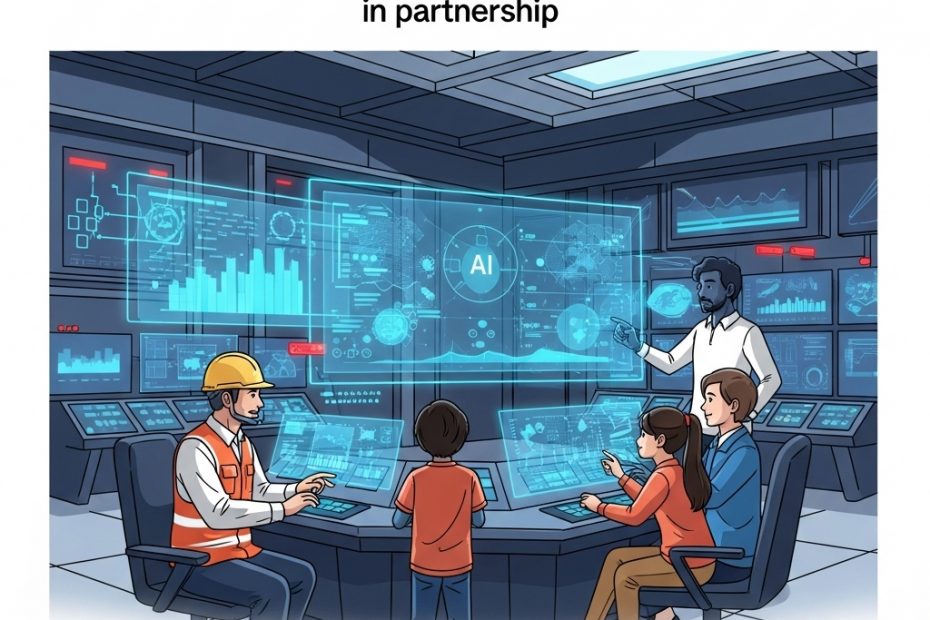
The guidance acknowledges AI’s potential to transform operations while warning about the risks of relying on it too heavily. It draws a clear line between safety and security—two ideas that are often confused. Security focuses on protecting systems from cyber threats, while safety ensures that the technology does not cause physical harm. AI, especially large language models, can behave unpredictably or “hallucinate,” making it unsuitable for making safety-critical decisions. Instead, AI should assist human operators, not replace them.
For instance, an AI system in a power plant might analyze data from turbines and recommend an adjustment, but if it misreads the data, the result could damage equipment or threaten worker safety. The guidance emphasizes that humans must always validate AI’s suggestions with independent checks. This partnership ensures that technology enhances, rather than undermines, safety.
The report also introduces strong architectural recommendations. Agencies advise using “push-based” systems that allow AI to analyze summaries of operational data without having direct control or inbound access to core systems. This setup prevents cybercriminals from exploiting AI connections to infiltrate critical networks.
Beyond technical design, the guidance highlights a human challenge, maintaining expertise. As industries automate, experienced operators are retiring, and younger staff may rely too much on digital tools. The guidance encourages organizations to preserve manual skills and ensure teams are trained to question and verify AI-generated outputs.
Another key message is transparency. Many companies are finding that AI is being built into tools and platforms without clear disclosure. The new framework urges organizations to demand clarity from vendors, requiring them to share details about model training data, storage, and how AI is embedded in products. This transparency helps organizations make informed decisions before adopting new technologies.
Above all, the document reinforces that accountability lies with people. Humans remain responsible for ensuring that systems function safely. The best results come when people and AI work together, combining human intuition with machine precision. This new guidance gives the world a map for doing just that—building resilience by pairing human oversight with technological progress.
Stay Smart. Stay Secure. Stay Cyber-Aware. Follow us on Instagram @smartteacheronline for practical, family-friendly cyber tips and weekly updates.

Artificial Intelligence is rapidly changing the world – Are you READY for it?

Artificial intelligence is no longer a futuristic idea, it is a force that is already transforming how we live, work, and learn. Between 2026 and 2030, AI will play an even bigger role in shaping the global job market and redefining the skills people need to succeed. While some worry that machines will take over human jobs, experts believe AI will actually create more opportunities than it replaces. The key will be learning how to adapt.
Companies like Google and Microsoft have already built AI systems that handle data entry, analysis, and content creation. Tools such as ChatGPT, Gamma, and Numerous other AI tools are changing how people work and communicate. These technologies are not just reshaping offices, they are influencing schools, homes, and even personal lives. The truth is that AI is here to stay, and those who learn how to use it will have a major advantage in the years ahead.
According to global studies, AI could add around $13 trillion to the world’s economy by 2030. That means new industries, new roles, and a demand for new skills. Jobs that involve repetitive or routine work, like customer service, accounting, and reception, will likely be automated. However, jobs that rely on creativity, emotional intelligence, or leadership will become even more important. Teachers, psychologists, HR managers, and executives will remain essential because their work depends on human judgment and connection, qualities AI cannot imitate.
Reports from the World Economic Forum estimate that AI could replace up to 85 million jobs by 2026 but will also create many new ones in data science, robotics, and software development. This shift means that the ability to learn continuously and adapt quickly will be critical. Workers will need to develop both technical and soft skills, including communication, teamwork, and problem-solving.
For families, this change means helping children prepare early. Parents can encourage their kids to explore technology, learn basic coding, and understand how AI works. Teachers, too, can play a key role in helping students develop the critical thinking and creativity needed to thrive in a digital world. For professionals, this means being open to new learning opportunities, attending AI-focused workshops, or even enrolling in online degree programs designed for future industries.
The future shaped by AI is not about humans versus machines, it is about collaboration. AI will handle repetitive work, while humans will focus on creativity, empathy, and innovation. Every industry will be affected, from healthcare to education to manufacturing. But those who embrace this change will not just survive, they will lead.
Artificial intelligence will redefine our world, and now is the time to prepare for it. Lifelong learning, adaptability, and curiosity will be the most valuable tools anyone can have in this new era.
Stay Smart. Stay Secure. Stay Cyber-Aware. Follow us on Instagram @smartteacheronline for practical, family-friendly cyber tips and weekly updates.

Microsoft Uncovers ‘Whisper Leak’ Attack That Can Identify Chat Topics in Encrypted AI Conversations.

Artificial intelligence tools like ChatGPT have become a regular part of modern life, helping students with assignments, parents with planning, and professionals with their work. But new research from Microsoft has revealed that even encrypted conversations with these AI tools may not be completely private. The company’s cybersecurity team recently uncovered a new type of cyberattack called Whisper Leak, which can allow attackers to guess what people are discussing with AI chatbots by analyzing encrypted traffic patterns.
At first glance, this sounds impossible. After all, encrypted chats are supposed to be secure. However, Microsoft researchers discovered that while attackers cannot read the exact words exchanged, they can still analyze the size and timing of the data packets moving between the user and the chatbot. By studying these patterns, attackers can train systems to predict when someone is talking about certain topics, such as politics, financial crimes, or other sensitive matters. It’s similar to listening to a conversation without hearing the words but still figuring out the subject from the rhythm and tone.
This vulnerability targets something called model streaming, a feature that allows AI chatbots to respond gradually as they generate answers. While this makes responses appear faster and more natural, it also gives attackers more data to analyze. Microsoft’s proof-of-concept testing showed that trained machine learning models could predict the topics of encrypted AI conversations with accuracy rates above 98 percent. Many popular models, including those from Microsoft, OpenAI, Mistral, Alibaba, and xAI, were affected. Google and Amazon models were slightly more resistant but still not immune.
The danger grows over time. The more data an attacker collects, the more accurate their systems become, turning Whisper Leak into a realistic and ongoing privacy risk. Microsoft warned that anyone with access to network traffic, such as someone sharing your Wi-Fi or even an internet service provider, could potentially use this method to track what you discuss with an AI assistant.
To counter this, major AI companies have started implementing fixes. One approach is to randomize the length of chatbot responses, making it harder to detect patterns. Microsoft also recommends that users avoid discussing highly sensitive topics when connected to public Wi-Fi, use VPNs for extra protection, and choose non-streaming chatbot options when privacy is essential.
For families, this discovery reinforces the importance of digital awareness. Parents and children need to understand that while AI tools are useful, they are not completely private. Kids should be encouraged to avoid sharing personal or sensitive information in chats. For professionals, it’s a reminder that confidential work-related topics should not be discussed through AI chatbots unless the platform has strict privacy controls.
The Whisper Leak attack is a wake-up call about the hidden risks of AI communication. It doesn’t mean we should stop using AI, it means we must use it wisely and stay alert.
Stay Smart. Stay Secure. Stay Cyber-Aware. Follow us on Instagram @smartteacheronline for practical, family-friendly cyber tips and weekly updates.

YouTube’s Dark Side: How 3,000 Fake Videos Are Stealing Your Data Right Now.

Thousands of YouTube videos are actively stealing personal data through an elaborate scam network that’s been operating since 2021, and your family might be next.
Security researchers have uncovered what they’re calling the “YouTube Ghost Network,” a massive malware operation involving over 3,000 malicious videos designed to trick users into downloading data-stealing software. What makes this particularly dangerous is that these aren’t obvious scams from sketchy new accounts. Cybercriminals are hijacking established YouTube channels, some with hundreds of thousands of subscribers, and transforming them into malware distribution hubs that look completely legitimate.
The operation works with frightening sophistication. Attackers use three types of accounts working in coordination: video accounts that upload fake tutorials, post accounts that spam community tabs with malicious links, and interact accounts that leave encouraging comments and likes to create a false sense of trust. This organized structure means that even when accounts get banned, they’re immediately replaced without disrupting the overall operation.
The videos typically target people searching for free premium software, game cheats (especially for Roblox), or cracked versions of expensive programs, making young people particularly vulnerable. These fake tutorials look professional, rack up hundreds of thousands of views, and are surrounded by seemingly genuine positive feedback. One hijacked channel called @Afonesio1, with 129,000 subscribers, was compromised twice just to spread this malware.
What’s actually being distributed is serious stuff. Families who fall for these traps end up infected with “stealers”, specialized malware like Lumma Stealer, Rhadamanthys, and RedLine that specifically target passwords, banking information, and personal data. The criminals cleverly hide their malicious links behind trusted platforms like Google Drive, Dropbox, and MediaFire, or create convincing phishing pages on Google Sites and Blogger. They even use URL shorteners to mask where links actually lead.
The scale of this operation has tripled since the start of this year alone, and it represents a disturbing evolution in how cybercriminals operate. They’re weaponizing the engagement tools and trust signals that make social media work, views, likes, comments, subscriber counts, to make dangerous content appear safe.
For families, this is a wake-up call. Parents need to have honest conversations with their kids about why “free” premium software is almost always a trap. Children and teens need to understand that high view counts don’t guarantee safety, and those encouraging comments are likely from fake accounts. Everyone should remember the golden rule: never download software from YouTube video descriptions.
The cybersecurity lesson here is clear, trust, but verify. That helpful tutorial might look polished and professional, but it could be a carefully crafted trap designed to steal your most sensitive information. As one security expert noted, threat actors are now leveraging “the trust inherent in legitimate accounts and the engagement mechanisms of popular platforms to orchestrate large-scale, persistent, and highly effective malware campaigns.”
In an age where YouTube is often the first place people turn to learn new skills or find solutions, staying skeptical and informed isn’t just smart, it’s essential for protecting your digital life.

Amazon Says Goodbye to 14,000 Corporate Jobs, but There’s More to the Story.

It’s the first week of November, and while most of us are settling into the calm rhythm of a new month, something big is stirring inside one of the world’s largest companies.
Amazon, yes, the same company that delivers your favorite books, gadgets, and late-night snack orders—is saying goodbye to 14,000 corporate workers. But before you panic or picture a sad parade of cardboard boxes and teary farewells, here’s the twist: Amazon isn’t collapsing. It’s transforming.
In a heartfelt note to staff, Beth Galetti, a senior vice president at the tech giant, explained that the company wants to become leaner, faster, and sharper. She said Amazon is reorganizing so it can take full advantage of the most powerful tool shaping our time, Artificial Intelligence.
AI, Galetti explained, is not just a buzzword. It’s the modern version of electricity, changing how every part of business and daily life works. From the way we shop to how we communicate, it’s already everywhere. And for Amazon, a company built on innovation, staying ahead means trimming unnecessary layers and investing in what truly matters.
It’s a bold move. After all, this announcement comes just months after Amazon reported an eye-popping $167 billion in quarterly sales, beating expectations across Wall Street. The company isn’t losing money, it’s re-shaping how it makes money.
For many workers, the news is bittersweet. Some will be offered new opportunities within Amazon. Others will receive support to transition into new careers. And while job cuts never come easy, Amazon insists this moment is about evolution, not elimination.
As CEO Andy Jassy shared earlier this year, “AI will mean fewer people doing some jobs, but more people doing new kinds of work.” That’s the delicate balance of progress, the same technology that automates one task creates an entirely new field in another.
Industry experts say the layoffs reflect a wider truth: companies everywhere are rewriting the playbook. Automation and AI are changing the workforce at lightning speed, and even tech giants aren’t immune to reinvention.
For us at Smart Teacher, this story isn’t just about corporate restructuring, it’s about learning to adapt. Whether you’re a student discovering coding, a parent guiding your child through career choices, or a professional curious about AI’s impact on work, the message is clear: the future belongs to the adaptable.
Because when technology moves fast, standing still isn’t safe, it’s standing still that makes you obsolete.
So, Smart Learners, as November unfolds, remember this: every shift in the world of work is also a signal for us to upgrade our own skills, our mindset, and our curiosity. Because the smartest companies, and the smartest people, never stop learning.