Skip to content

CYBERBULLYING and it’s effects on young people.

Cyberbullying has changed the way bullying affects young people. In the past, bullying often ended when a child left school. Today, it can follow them home through phones, social media, and messaging apps, making it almost impossible to escape. The emotional damage caused by cyberbullying can be severe, especially when it goes unnoticed for long periods.

Sophie was just 14 when her teacher, Ethan, noticed something was wrong. She had become withdrawn in class, avoided her phone, and seemed distracted and uninterested in her schoolwork. These changes may not seem alarming on their own, but together they formed a pattern that Ethan recognized as a sign of distress.

Like many teenagers, Sophie found it hard to talk about what she was going through. Fear and embarrassment kept her silent. When Ethan involved her parents, they slowly learned that Sophie was being bullied by her peers, both at school and online.

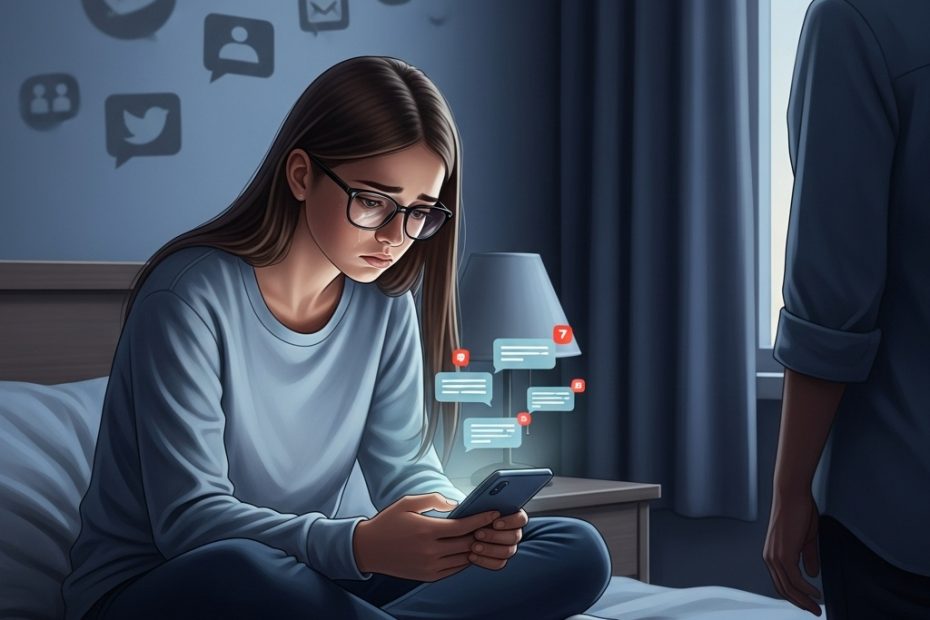
What made Sophie a target was something many children experience. She wore glasses because of myopia. For years, it had not mattered. Then suddenly, classmates began mocking her appearance. The teasing spread quickly and turned cruel. Sophie lost friends and became isolated, labeled as “different.”

The bullying became far more dangerous when it moved online. Former friends created a fake social media group designed to humiliate her. The group grew rapidly, and Sophie was tagged in hateful posts and sent abusive messages. She was threatened with the exposure of private messages and false rumors if she spoke out. The bullying continued for months, silently damaging her mental health.

By the time adults intervened, Sophie had begun self-harming. This moment highlighted how deeply cyberbullying can affect a young person when it is hidden and unresolved. With support from her teacher and parents, the fake accounts were reported, the bullying stopped, and steps were taken to prevent it from happening again.

Today, Sophie is confident, resilient, and preparing for college. Her story reminds us that cyberbullying is serious, but it is not unstoppable. Early attention, open communication, and teamwork between parents, teachers, and schools can protect children and help them heal.


A Christmas Day Message from All of Us at Smart Teacher Platform.

Christmas Day has a special way of bringing people together, no matter how busy life has been. It is a day that encourages us to pause, reflect, and appreciate the moments that truly matter. At Smart Teacher Platform, we believe Christmas is not just about celebration, but about connection, gratitude, and hope for the days ahead.

Today, we want to send warm wishes to everyone who is part of our community. Whether you are waking up to a house filled with excitement, enjoying a quiet morning, or spending the day thinking of loved ones near and far, we hope Christmas meets you with peace. The beauty of this day is that it does not demand perfection. It simply asks us to be present and to cherish the small, meaningful moments.

This season is often filled with traditions that remind us of comfort and familiarity. Shared meals, favorite songs, thoughtful messages, and simple gestures all come together to create lasting memories. Even in the midst of challenges, Christmas carries a message of renewal and reassurance. It reminds us that kindness still matters, connection still matters, and hope is always worth holding onto.

We are deeply grateful for the readers who have supported Smart Teacher Platform throughout the year. Your presence has helped build a community centered on learning, growth, and positive impact. Knowing that our words reach homes, families, and individuals across different places is something we do not take lightly.

As the year begins to close, Christmas offers a chance to rest before stepping into something new. It is a moment to reset, reflect, and look ahead with optimism. We hope you give yourself permission to slow down today, to enjoy the people around you, and to carry the warmth of this season into the coming year.

From everyone at Smart Teacher Platform, we wish you a joyful and peaceful Christmas. May your day be filled with light, laughter, and moments that stay with you long after the holiday ends.

Follow us on Instagram @smartteacheronline for updates, stories, and moments we share all year round.

Artificial Intelligence is rapidly changing the world – Are you READY for it?

Artificial intelligence is no longer a futuristic idea, it is a force that is already transforming how we live, work, and learn. Between 2026 and 2030, AI will play an even bigger role in shaping the global job market and redefining the skills people need to succeed. While some worry that machines will take over human jobs, experts believe AI will actually create more opportunities than it replaces. The key will be learning how to adapt.
Companies like Google and Microsoft have already built AI systems that handle data entry, analysis, and content creation. Tools such as ChatGPT, Gamma, and Numerous other AI tools are changing how people work and communicate. These technologies are not just reshaping offices, they are influencing schools, homes, and even personal lives. The truth is that AI is here to stay, and those who learn how to use it will have a major advantage in the years ahead.
According to global studies, AI could add around $13 trillion to the world’s economy by 2030. That means new industries, new roles, and a demand for new skills. Jobs that involve repetitive or routine work, like customer service, accounting, and reception, will likely be automated. However, jobs that rely on creativity, emotional intelligence, or leadership will become even more important. Teachers, psychologists, HR managers, and executives will remain essential because their work depends on human judgment and connection, qualities AI cannot imitate.
Reports from the World Economic Forum estimate that AI could replace up to 85 million jobs by 2026 but will also create many new ones in data science, robotics, and software development. This shift means that the ability to learn continuously and adapt quickly will be critical. Workers will need to develop both technical and soft skills, including communication, teamwork, and problem-solving.
For families, this change means helping children prepare early. Parents can encourage their kids to explore technology, learn basic coding, and understand how AI works. Teachers, too, can play a key role in helping students develop the critical thinking and creativity needed to thrive in a digital world. For professionals, this means being open to new learning opportunities, attending AI-focused workshops, or even enrolling in online degree programs designed for future industries.
The future shaped by AI is not about humans versus machines, it is about collaboration. AI will handle repetitive work, while humans will focus on creativity, empathy, and innovation. Every industry will be affected, from healthcare to education to manufacturing. But those who embrace this change will not just survive, they will lead.
Artificial intelligence will redefine our world, and now is the time to prepare for it. Lifelong learning, adaptability, and curiosity will be the most valuable tools anyone can have in this new era.
Stay Smart. Stay Secure. Stay Cyber-Aware. Follow us on Instagram @smartteacheronline for practical, family-friendly cyber tips and weekly updates.

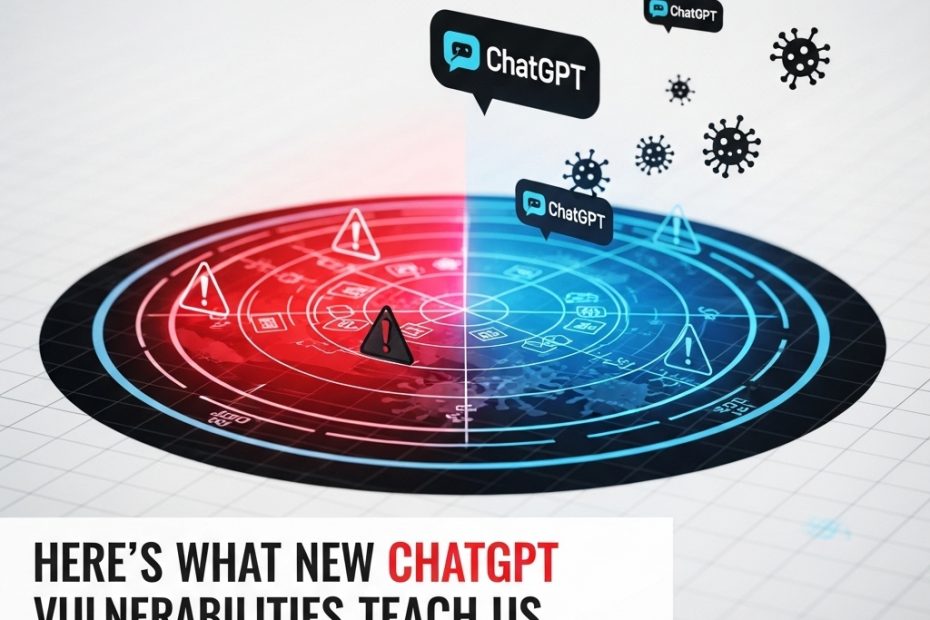
When AI Gets Tricked: Here’s What New ChatGPT Vulnerabilities Teach Us about Staying Safe Online.

Artificial intelligence has become part of everyday life, in our homes, our schools, and even our workplaces. Kids use it to get homework help, parents use it to plan budgets or manage schedules, and professionals rely on it for fast research, writing support, or problem-solving. But with technology growing this quickly, it’s easy to forget something important: even the smartest systems can be tricked. And when they are, the people who pay the price are the everyday users who trust them.
That’s exactly what happened recently when cybersecurity researchers discovered seven vulnerabilities affecting ChatGPT’s latest models, GPT-4o and GPT-5. These weaknesses weren’t minor bugs. They were serious loopholes that could allow attackers to secretly manipulate the AI and potentially access personal information from users’ chat histories or the new memory feature, all without users touching anything suspicious.
In simple terms, the researchers found ways that attackers could hide harmful instructions inside normal websites, social posts, or even a simple search query. Then, when ChatGPT reads or summarizes those websites, it accidentally follows the attacker’s hidden instructions instead of yours. Some attacks required just one click. Others required no click at all. That’s what makes this discovery so concerning. It shows how incredibly easy it is for people with bad intentions to influence the way AI tools behave, even when you think you’re using them safely.
For families, this research hits close to home. Kids and teens often trust AI tools without question. They assume the information given is correct, helpful, and private. Parents rely on AI for everyday tasks, from organizing family life to working remotely. And professionals use these tools for everything from writing emails to analyzing data. When the AI itself can be manipulated, it creates a hidden risk that affects everyone, regardless of age or tech experience.
What stands out most in this discovery is how normal the entry points look. A harmless-looking website. A basic link. A simple request: “ChatGPT, summarize this for me.” That’s all it takes for attackers to sneak in. One of the most concerning issues researchers found is something called memory poisoning , where hidden instructions get stored inside ChatGPT’s long-term memory and influence future responses. Imagine your digital helper learning the wrong thing and carrying that error into future conversations. That’s the kind of subtle risk most people never think about.
But here’s the part that matters most: awareness is protection. Understanding how these attacks work helps parents guide their kids, helps professionals use AI responsibly, and helps young people build healthy digital habits. This discovery isn’t a reason to fear AI, it’s a reminder to use it wisely. Don’t share private details. Don’t click unfamiliar links. Teach kids that AI is a tool, not a diary. And stay updated as technology evolves.
Artificial intelligence is powerful, exciting, and full of opportunity. But like everything in the digital world, it works best when users are informed. Staying cyber-aware isn’t just a skill anymore, it’s a life necessity for families and future-ready learners alike.