Skip to content

HOW TO RECOVER A COMPROMISED WHATSAPP ACCOUNT.

Is your WhatsApp acting strange? Maybe friends are getting weird messages from you that you never sent, or you suddenly can’t log in.

Don’t worry – this is called a compromised account, and WhatsApp makes it easy for anyone (kids, parents, or professionals) to get it back quickly!

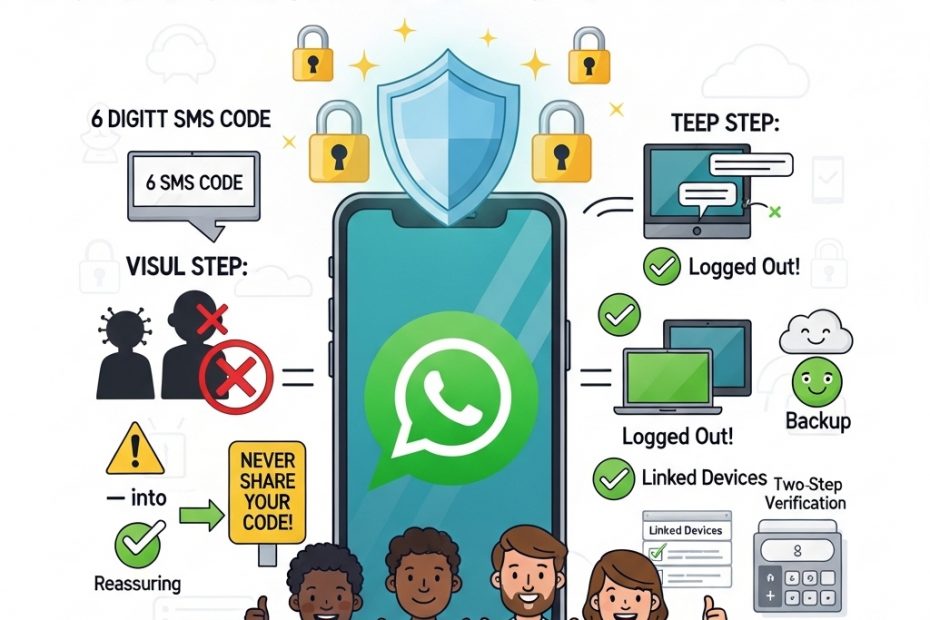
According to the official WhatsApp Help Center, the first rule is simple: never share your 6-digit registration code with anyone – not even family or friends. That code is like the only key to your private chats. If someone else is using your account, follow these easy steps right on your phone with the same SIM card.

Open WhatsApp and tap “Log back in” then “Continue.” Enter your full phone number (including the country code like +234) and press OK. Next, type the 6-digit code sent by text or phone call. As soon as you do this, WhatsApp automatically kicks out every other device that was secretly using your account – laptops, tablets, everything! You are now safely back inside.
What if it asks for a two-step verification PIN you don’t know? A hacker might have turned this on. Just wait 7 days and try again – you will still be able to log in after the wait, and the intruder gets locked out immediately.

Once you’re back, tell your family and friends right away: “Please ignore any strange messages from me!” This stops scams fast. Then make your account strong: go to Settings > Account > Two-step verification and turn it on (add your email so you never get stuck). Check Linked Devices and log out anything you don’t recognise. Turn on App Lock and Chat Lock using your phone’s fingerprint or face ID.

Remember, WhatsApp uses end-to-end encryption, so no one else could read your old messages – they stay safe on your phone only. If you had a Google Drive or iCloud backup, you can restore all your chats and photos too.

Prevention is the best friend: always update WhatsApp, set a strong voicemail password, and teach kids never to share codes.
AI Chatbots as Secret Messengers for Hackers?

Imagine this: You’re at home helping your child with homework using a trusted AI like Microsoft Copilot or xAI’s Grok. You ask it questions, it fetches info from the web, summarizes pages, everything feels normal and safe. But behind the scenes, something sneaky could be happening.

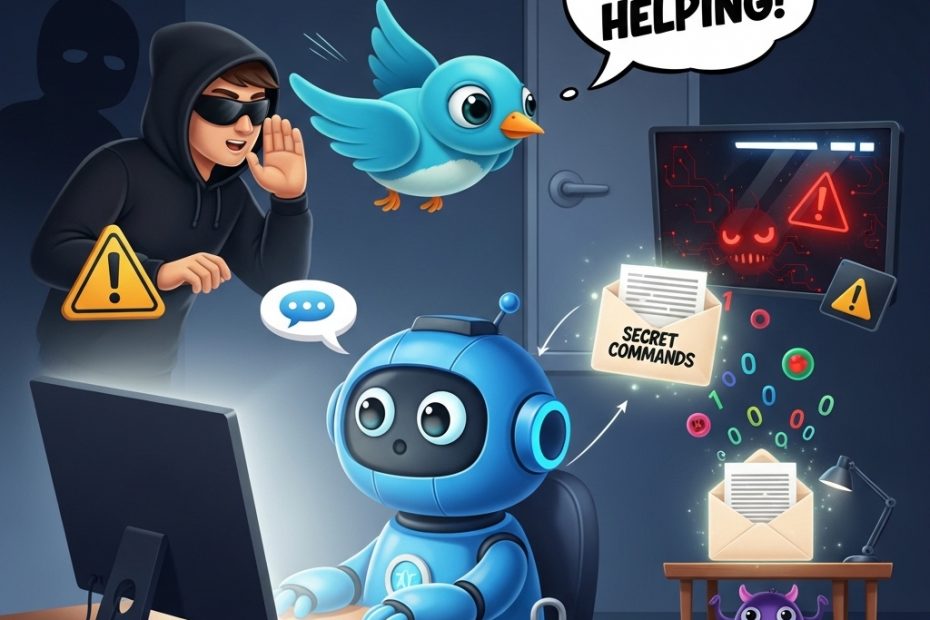
Cybersecurity experts at Check Point recently revealed a clever trick hackers are using. They can turn these popular AI assistants into hidden “command-and-control” relays—basically, secret messengers for malware. Here’s how it works in simple steps:

First, a hacker tricks someone’s computer into getting infected with malware (maybe through a bad download, phishing email, or risky click, things we all warn our kids about).

Once inside, the malware doesn’t need its own suspicious internet connection. Instead, it cleverly “talks” to the AI through normal chat prompts.

The malware sends special instructions disguised as innocent questions. The AI, doing what it does best, visits a website the hacker controls, grabs the next command, and sends it back in its reply. To everyone watching, including antivirus software, it just looks like regular family use of AI. No weird traffic, no blocked domains, no alarms. It’s stealthy and blends right in with everyday enterprise or home chats.

Even scarier? No login or API key is needed. Hackers don’t create accounts that companies can ban. They just abuse the public web-browsing feature millions of us rely on.

Check Point calls this “AI as a C2 proxy.” It lets attackers not only send commands but also get the AI to think strategically: “Is this computer worth targeting? How can we avoid detection? What’s the next smart move?”

The AI becomes both messenger and advisor—turning trusted tools into powerful weapons for cybercriminals.

This isn’t the first time we’ve seen bad actors hide in plain sight. It’s similar to “living off trusted sites” attacks, where malware uses legitimate services like cloud storage or social media to stay under the radar.

Now, AI chatbots join the list.
The key takeaway for families? The best defense starts with prevention: Keep devices updated, use strong unique passwords, enable two-factor authentication, teach kids to think before clicking, and avoid downloading from unknown sources. If malware never gets on the device, there’s no secret messenger to abuse.

As AI becomes part of daily life—homework help, quick research, creative fun—staying aware of these evolving risks is crucial. Knowledge is our best shield.
Found this eye-opening?

Join us on Instagram and TikTok @smartteacheronline for weekly tips, kid-friendly explainers, parent guides, and real-world cyber stories that make online safety feel empowering, not scary. Hit subscribe and turn on notifications—we’ll keep your family one step ahead in this digital world!
What surprised you most about this? Drop a comment below—we’d love to hear! 👇

#SmartTeacherOnline #CyberSafety #AISafetyForFamilies

How To Balance Screentime and Online Safety as a Smart Parent.

Parenting in today’s world means dealing with screens everywhere. At Smart Teacher Online, we focus on cybersecurity and edtech to help families stay safe. Screen time is how long we stare at phones, tablets, or computers. It’s fun for kids to play games or watch shows, but too much can be a problem. Eyes get sore, sleep gets short, and online risks pop up.

Smart parents balance fun with safety. Start with rules: Limit screen time to 1-2 hours a day for fun stuff. Use built-in timers on devices. This helps kids learn self-control.

Cybersecurity is key. Parental controls act like guards. They block unsafe websites and limit apps. Teach kids about dangers: Strangers online might ask for personal info. That’s called grooming – avoid it! Phishing is fake emails or messages tricking you into giving passwords. Use simple analogies: “It’s like a stranger offering candy – say no!”

Balance screens with offline activities. Play sports, read books, or cook together. This builds strong bodies and happy minds.

Parents, lead by example. Put devices away during meals. Family screen time can be good, like educational videos on animals or math.

In edtech, screens help learning. Apps teach coding or languages safely. But update software to fight viruses – bad programs that harm devices.

Strong passwords protect accounts: Use “P@ssw0rdFun!” instead of “1234.”

Involve kids in decisions. Ask, “What rules should we have?” This teaches responsibility.

Screen time affects health. Too much leads to less exercise, poor sleep, or feeling sad. Cybersecurity prevents bigger issues, like identity theft.

Tips for parents:

Monitor apps: Know what kids download.
Use family sharing: See locations and usage.
Educate on privacy: Don’t share photos with strangers.
For kids: Screens are tools, not toys all day. Tell parents if something online scares you.

At Smart Teacher, we believe safe screen time builds smart families. Try these tips today!

Could Canada Be the Next Country to Ban Social Media for Kids?

Social media has become a normal part of childhood for many families, but governments around the world are beginning to ask whether children are being exposed too early and at too great a cost. In Canada, this question is now at the center of a growing policy debate, as the federal government considers a possible ban on social media for children under the age of 14.

Canadian Culture Minister Marc Miller has confirmed that such a ban is being explored as part of broader online harm legislation. The move comes amid rising concern about how social media affects children’s mental health, safety, and development. From cyberbullying and online harassment to exposure to inappropriate content and addictive design features, parents and educators have long raised alarms about the risks children face online.

Canada is not alone in this conversation. Australia recently became the first country in the world to ban children under 16 from using social media platforms. That decision has sparked global discussion, with governments watching closely to see whether the policy will be effective in protecting young users. Canadian lawmakers are now examining similar approaches as they reconsider how best to safeguard children in digital spaces.

Parliament has spent several years studying online harms. Lawmakers have held multiple hearings focused on how social media platforms target young users and how easily children can be drawn into harmful online experiences. Since 2021, two versions of online safety legislation have been introduced but failed to pass. With increasing public concern and international examples to reference, the pressure to act is growing.

Technology companies, however, are pushing back against the idea of an outright ban. Many argue that enforcing age limits online is difficult, as current systems for age verification are often unreliable. Companies like Meta have suggested shifting responsibility to app stores, where Google and Apple could verify ages and require parental consent before allowing children to download social media apps.

For parents, this ongoing debate highlights an important reality. Regardless of whether a ban becomes law, children need guidance, boundaries, and education when it comes to social media use. Laws can help set limits, but they cannot replace conversations at home, parental involvement, and digital literacy.

For children, the discussion is a reminder that online spaces are not always designed with their well-being in mind. Social media platforms are built to capture attention and encourage constant engagement, which can affect self-esteem, sleep, and emotional health.

As Canada weighs its options, families are encouraged to stay informed and proactive. Understanding the risks, setting clear rules, and maintaining open communication can help children navigate the online world more safely, regardless of what legislation is eventually passed.

CYBERBULLYING and it’s effects on young people.

Cyberbullying has changed the way bullying affects young people. In the past, bullying often ended when a child left school. Today, it can follow them home through phones, social media, and messaging apps, making it almost impossible to escape. The emotional damage caused by cyberbullying can be severe, especially when it goes unnoticed for long periods.

Sophie was just 14 when her teacher, Ethan, noticed something was wrong. She had become withdrawn in class, avoided her phone, and seemed distracted and uninterested in her schoolwork. These changes may not seem alarming on their own, but together they formed a pattern that Ethan recognized as a sign of distress.

Like many teenagers, Sophie found it hard to talk about what she was going through. Fear and embarrassment kept her silent. When Ethan involved her parents, they slowly learned that Sophie was being bullied by her peers, both at school and online.

What made Sophie a target was something many children experience. She wore glasses because of myopia. For years, it had not mattered. Then suddenly, classmates began mocking her appearance. The teasing spread quickly and turned cruel. Sophie lost friends and became isolated, labeled as “different.”

The bullying became far more dangerous when it moved online. Former friends created a fake social media group designed to humiliate her. The group grew rapidly, and Sophie was tagged in hateful posts and sent abusive messages. She was threatened with the exposure of private messages and false rumors if she spoke out. The bullying continued for months, silently damaging her mental health.

By the time adults intervened, Sophie had begun self-harming. This moment highlighted how deeply cyberbullying can affect a young person when it is hidden and unresolved. With support from her teacher and parents, the fake accounts were reported, the bullying stopped, and steps were taken to prevent it from happening again.

Today, Sophie is confident, resilient, and preparing for college. Her story reminds us that cyberbullying is serious, but it is not unstoppable. Early attention, open communication, and teamwork between parents, teachers, and schools can protect children and help them heal.

BEFORE GETTING THAT GADGET FOR YOUR TEENAGER, CONSIDER THESE FIRST!

The moment a parent hands a teenager their first serious gadget often feels bigger than it looks. It is not just a phone or a laptop. It is a quiet transition. A step toward independence. A signal of trust. For many families, this moment comes with excitement, hesitation, and a long list of questions that rarely have simple answers.

Teenagers today live in a world where technology is everywhere. School assignments are submitted online. Friendships are maintained through messages and social platforms. Information is available at the tap of a screen. It is no surprise that many parents feel pressure to buy devices earlier than they planned, especially when everyone around them seems to be doing the same. But giving a teenager a gadget is not a decision to rush. It deserves thought, conversation, and clarity.

Before any device changes hands, one question matters more than the brand or the model. Is this teenager ready? Readiness has very little to do with age and everything to do with maturity. Some teenagers can manage screen time, respect boundaries, and communicate openly about what they encounter online. Others may still struggle with impulse control or emotional regulation. A device connected to the internet opens doors to learning and creativity, but it also opens doors to content, conversations, and pressures that can be overwhelming without guidance.

Many parents underestimate how quickly a gadget becomes part of a teenager’s emotional world. It can shift routines, affect sleep, change attention spans, and influence self-esteem. Once exposure begins, it is difficult to reverse. That is why it is important for parents to slow down and consider not just what their teenager wants, but what they truly need at this stage of development.

Clear rules are another part of the conversation that cannot be skipped. Devices without boundaries often create confusion and conflict. Teenagers need structure, even when they push against it. Talking openly about screen time, online safety, social media behavior, and consequences builds trust and prevents misunderstandings. When expectations are clear from the beginning, teenagers are more likely to use their devices responsibly.

Parental involvement does not end once the device is handed over. Monitoring, guidance, and regular check-ins are essential. This is not about control or surveillance. It is about protection and partnership. Teenagers are learning how to navigate a digital world that even adults are still figuring out. They need support, not silence.

Finally, gadgets can be powerful tools for building responsibility when used intentionally. Involving teenagers in decisions about data usage, care of the device, and balanced routines teaches accountability. Encouraging offline activities, face-to-face relationships, and downtime reminds them that technology is a tool, not a replacement for real life.

Giving a teenager a gadget is not just a purchase. It is a parenting decision that shapes habits, values, and trust. When handled thoughtfully, it can become a positive step forward rather than a source of regret.

New Cyber security Guidance Paves the Way for AI in Critical Infrastructure.

Artificial intelligence is moving from the world of ideas into the heart of the systems that power modern life. From electricity and transportation to water treatment and manufacturing, AI is helping industries become more efficient and predictive. But with this progress comes a new challenge, how to use AI safely in systems that affect millions of lives.
Global cybersecurity agencies, including CISA, the FBI, the NSA, and Australia’s Cyber Security Centre, have come together to publish the first unified guidance on the secure use of AI in critical infrastructure. The document, titled Principles for the Secure Integration of Artificial Intelligence in Operational Technology, represents a turning point for cybersecurity and safety. It provides practical, real-world direction for operators who are integrating AI into essential services.
The guidance acknowledges AI’s potential to transform operations while warning about the risks of relying on it too heavily. It draws a clear line between safety and security—two ideas that are often confused. Security focuses on protecting systems from cyber threats, while safety ensures that the technology does not cause physical harm. AI, especially large language models, can behave unpredictably or “hallucinate,” making it unsuitable for making safety-critical decisions. Instead, AI should assist human operators, not replace them.
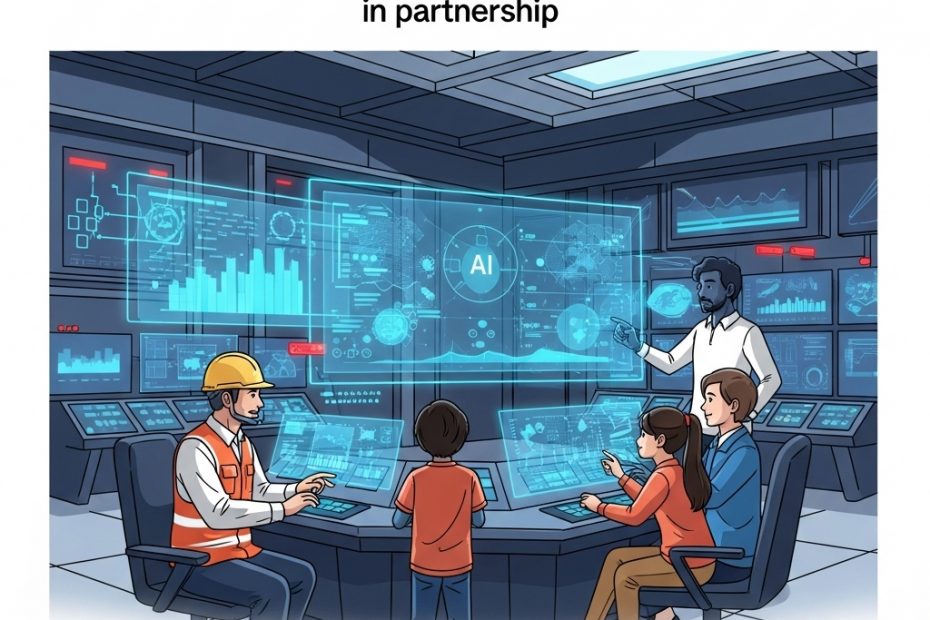
For instance, an AI system in a power plant might analyze data from turbines and recommend an adjustment, but if it misreads the data, the result could damage equipment or threaten worker safety. The guidance emphasizes that humans must always validate AI’s suggestions with independent checks. This partnership ensures that technology enhances, rather than undermines, safety.
The report also introduces strong architectural recommendations. Agencies advise using “push-based” systems that allow AI to analyze summaries of operational data without having direct control or inbound access to core systems. This setup prevents cybercriminals from exploiting AI connections to infiltrate critical networks.
Beyond technical design, the guidance highlights a human challenge, maintaining expertise. As industries automate, experienced operators are retiring, and younger staff may rely too much on digital tools. The guidance encourages organizations to preserve manual skills and ensure teams are trained to question and verify AI-generated outputs.
Another key message is transparency. Many companies are finding that AI is being built into tools and platforms without clear disclosure. The new framework urges organizations to demand clarity from vendors, requiring them to share details about model training data, storage, and how AI is embedded in products. This transparency helps organizations make informed decisions before adopting new technologies.
Above all, the document reinforces that accountability lies with people. Humans remain responsible for ensuring that systems function safely. The best results come when people and AI work together, combining human intuition with machine precision. This new guidance gives the world a map for doing just that—building resilience by pairing human oversight with technological progress.
Stay Smart. Stay Secure. Stay Cyber-Aware. Follow us on Instagram @smartteacheronline for practical, family-friendly cyber tips and weekly updates.

Artificial Intelligence is rapidly changing the world – Are you READY for it?

Artificial intelligence is no longer a futuristic idea, it is a force that is already transforming how we live, work, and learn. Between 2026 and 2030, AI will play an even bigger role in shaping the global job market and redefining the skills people need to succeed. While some worry that machines will take over human jobs, experts believe AI will actually create more opportunities than it replaces. The key will be learning how to adapt.
Companies like Google and Microsoft have already built AI systems that handle data entry, analysis, and content creation. Tools such as ChatGPT, Gamma, and Numerous other AI tools are changing how people work and communicate. These technologies are not just reshaping offices, they are influencing schools, homes, and even personal lives. The truth is that AI is here to stay, and those who learn how to use it will have a major advantage in the years ahead.
According to global studies, AI could add around $13 trillion to the world’s economy by 2030. That means new industries, new roles, and a demand for new skills. Jobs that involve repetitive or routine work, like customer service, accounting, and reception, will likely be automated. However, jobs that rely on creativity, emotional intelligence, or leadership will become even more important. Teachers, psychologists, HR managers, and executives will remain essential because their work depends on human judgment and connection, qualities AI cannot imitate.
Reports from the World Economic Forum estimate that AI could replace up to 85 million jobs by 2026 but will also create many new ones in data science, robotics, and software development. This shift means that the ability to learn continuously and adapt quickly will be critical. Workers will need to develop both technical and soft skills, including communication, teamwork, and problem-solving.
For families, this change means helping children prepare early. Parents can encourage their kids to explore technology, learn basic coding, and understand how AI works. Teachers, too, can play a key role in helping students develop the critical thinking and creativity needed to thrive in a digital world. For professionals, this means being open to new learning opportunities, attending AI-focused workshops, or even enrolling in online degree programs designed for future industries.
The future shaped by AI is not about humans versus machines, it is about collaboration. AI will handle repetitive work, while humans will focus on creativity, empathy, and innovation. Every industry will be affected, from healthcare to education to manufacturing. But those who embrace this change will not just survive, they will lead.
Artificial intelligence will redefine our world, and now is the time to prepare for it. Lifelong learning, adaptability, and curiosity will be the most valuable tools anyone can have in this new era.
Stay Smart. Stay Secure. Stay Cyber-Aware. Follow us on Instagram @smartteacheronline for practical, family-friendly cyber tips and weekly updates.

Microsoft Uncovers ‘Whisper Leak’ Attack That Can Identify Chat Topics in Encrypted AI Conversations.

Artificial intelligence tools like ChatGPT have become a regular part of modern life, helping students with assignments, parents with planning, and professionals with their work. But new research from Microsoft has revealed that even encrypted conversations with these AI tools may not be completely private. The company’s cybersecurity team recently uncovered a new type of cyberattack called Whisper Leak, which can allow attackers to guess what people are discussing with AI chatbots by analyzing encrypted traffic patterns.
At first glance, this sounds impossible. After all, encrypted chats are supposed to be secure. However, Microsoft researchers discovered that while attackers cannot read the exact words exchanged, they can still analyze the size and timing of the data packets moving between the user and the chatbot. By studying these patterns, attackers can train systems to predict when someone is talking about certain topics, such as politics, financial crimes, or other sensitive matters. It’s similar to listening to a conversation without hearing the words but still figuring out the subject from the rhythm and tone.
This vulnerability targets something called model streaming, a feature that allows AI chatbots to respond gradually as they generate answers. While this makes responses appear faster and more natural, it also gives attackers more data to analyze. Microsoft’s proof-of-concept testing showed that trained machine learning models could predict the topics of encrypted AI conversations with accuracy rates above 98 percent. Many popular models, including those from Microsoft, OpenAI, Mistral, Alibaba, and xAI, were affected. Google and Amazon models were slightly more resistant but still not immune.
The danger grows over time. The more data an attacker collects, the more accurate their systems become, turning Whisper Leak into a realistic and ongoing privacy risk. Microsoft warned that anyone with access to network traffic, such as someone sharing your Wi-Fi or even an internet service provider, could potentially use this method to track what you discuss with an AI assistant.
To counter this, major AI companies have started implementing fixes. One approach is to randomize the length of chatbot responses, making it harder to detect patterns. Microsoft also recommends that users avoid discussing highly sensitive topics when connected to public Wi-Fi, use VPNs for extra protection, and choose non-streaming chatbot options when privacy is essential.
For families, this discovery reinforces the importance of digital awareness. Parents and children need to understand that while AI tools are useful, they are not completely private. Kids should be encouraged to avoid sharing personal or sensitive information in chats. For professionals, it’s a reminder that confidential work-related topics should not be discussed through AI chatbots unless the platform has strict privacy controls.
The Whisper Leak attack is a wake-up call about the hidden risks of AI communication. It doesn’t mean we should stop using AI, it means we must use it wisely and stay alert.
Stay Smart. Stay Secure. Stay Cyber-Aware. Follow us on Instagram @smartteacheronline for practical, family-friendly cyber tips and weekly updates.

When AI Gets Tricked: Here’s What New ChatGPT Vulnerabilities Teach Us about Staying Safe Online.

Artificial intelligence has become part of everyday life, in our homes, our schools, and even our workplaces. Kids use it to get homework help, parents use it to plan budgets or manage schedules, and professionals rely on it for fast research, writing support, or problem-solving. But with technology growing this quickly, it’s easy to forget something important: even the smartest systems can be tricked. And when they are, the people who pay the price are the everyday users who trust them.
That’s exactly what happened recently when cybersecurity researchers discovered seven vulnerabilities affecting ChatGPT’s latest models, GPT-4o and GPT-5. These weaknesses weren’t minor bugs. They were serious loopholes that could allow attackers to secretly manipulate the AI and potentially access personal information from users’ chat histories or the new memory feature, all without users touching anything suspicious.
In simple terms, the researchers found ways that attackers could hide harmful instructions inside normal websites, social posts, or even a simple search query. Then, when ChatGPT reads or summarizes those websites, it accidentally follows the attacker’s hidden instructions instead of yours. Some attacks required just one click. Others required no click at all. That’s what makes this discovery so concerning. It shows how incredibly easy it is for people with bad intentions to influence the way AI tools behave, even when you think you’re using them safely.
For families, this research hits close to home. Kids and teens often trust AI tools without question. They assume the information given is correct, helpful, and private. Parents rely on AI for everyday tasks, from organizing family life to working remotely. And professionals use these tools for everything from writing emails to analyzing data. When the AI itself can be manipulated, it creates a hidden risk that affects everyone, regardless of age or tech experience.
What stands out most in this discovery is how normal the entry points look. A harmless-looking website. A basic link. A simple request: “ChatGPT, summarize this for me.” That’s all it takes for attackers to sneak in. One of the most concerning issues researchers found is something called memory poisoning , where hidden instructions get stored inside ChatGPT’s long-term memory and influence future responses. Imagine your digital helper learning the wrong thing and carrying that error into future conversations. That’s the kind of subtle risk most people never think about.
But here’s the part that matters most: awareness is protection. Understanding how these attacks work helps parents guide their kids, helps professionals use AI responsibly, and helps young people build healthy digital habits. This discovery isn’t a reason to fear AI, it’s a reminder to use it wisely. Don’t share private details. Don’t click unfamiliar links. Teach kids that AI is a tool, not a diary. And stay updated as technology evolves.
Artificial intelligence is powerful, exciting, and full of opportunity. But like everything in the digital world, it works best when users are informed. Staying cyber-aware isn’t just a skill anymore, it’s a life necessity for families and future-ready learners alike.