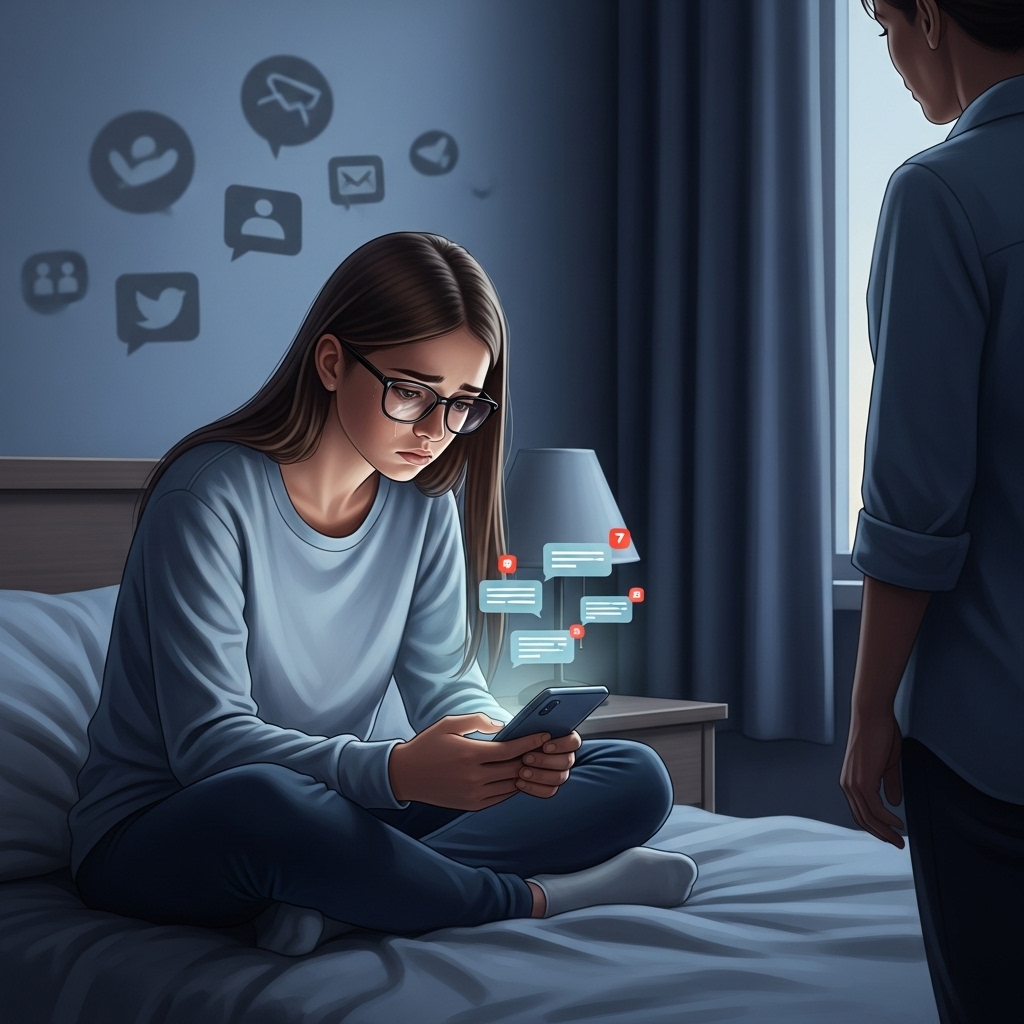
Bullying has always been painful for children, but in today’s digital world, it has become harder to escape. What used to end at the school gate can now follow a child home, into their bedroom, and onto their phone screen. Cyberbullying does not need physical contact to cause harm. Words, images, and threats shared online can leave deep emotional scars that last far beyond childhood.
Ethan, a school teacher, shared a story that reminds us just how damaging cyberbullying can be, and how important it is for adults to notice the signs early.
Spotting the Signs
Sophie was 14 when Ethan began to notice small but worrying changes in her behavior at school. She had once been an engaged student, but she started losing interest in her studies. She often sat quietly at the back of the classroom with her head down and avoided eye contact. One detail stood out the most. Sophie stopped bringing her phone to class and seemed constantly distracted and withdrawn.
For teachers and parents, these changes may seem subtle at first, but they are often signs that something deeper is going on. Teenagers do not always say when they are struggling, but their behavior often speaks for them.
When Talking Feels Impossible
Ethan suspected Sophie was dealing with bullying, but he also knew how difficult it can be for young people to talk about it. Fear, embarrassment, and the worry of making things worse often keep children silent. Rather than making assumptions, Ethan decided to involve Sophie’s parents carefully.
After visiting her home and speaking with them, the truth slowly came out. Sophie had been having serious problems with her peers, and the bullying had moved online.
Being Targeted for Being “Different”
Sophie had been wearing glasses since she was nine because of myopia. For years, it had not been an issue. But around the age of 13, some classmates began making fun of her appearance. What started as teasing quickly turned into cruelty. The mocking spread, and Sophie began losing friends. Being labeled “different” made her feel isolated and ashamed.
Cyberbullying thrives on this sense of difference. Young people who already feel insecure are often targeted, and repeated insults slowly destroy self-confidence.
When Cyberbullying Spreads
The bullying escalated when students created a fake Facebook group dedicated to humiliating Sophie. The group grew rapidly, attracting around 180 members. She was tagged in hurtful memes, received abusive messages, and was threatened with the release of private messages and false rumors if she reported the abuse.
This went on for five months. During that time, Sophie’s mental health deteriorated. When Ethan finally sat down with Sophie and her parents, they discovered she had started self-harming. The emotional damage had gone far beyond schoolyard teasing.
Getting to the Root of the Problem
Like many children, Sophie had kept the bullying secret. She felt afraid and embarrassed and believed she had to face it alone. The first step was helping her understand that she was not alone and that what was happening was not her fault.
With cooperation between the school and parents, the fake accounts were traced. The group was reported, the bullying stopped, and the parents of those involved were informed and asked to monitor their children’s online behavior.
Hope After the Storm
Today, two years later, Sophie is doing well. She has rebuilt her confidence, focused on her studies, and is preparing for college. Her story is painful, but it carries an important message. Cyberbullying can take over a young person’s life, but when adults act early, listen carefully, and work together, it can be stopped.
At Smart Teacher Online, we believe children deserve to feel safe, supported, and confident both offline and online. Awareness, communication, and early action save lives.
Follow @smartteacheronline on Instagram for more guidance on keeping children safe online, recognizing warning signs, and supporting young people through digital challenges.