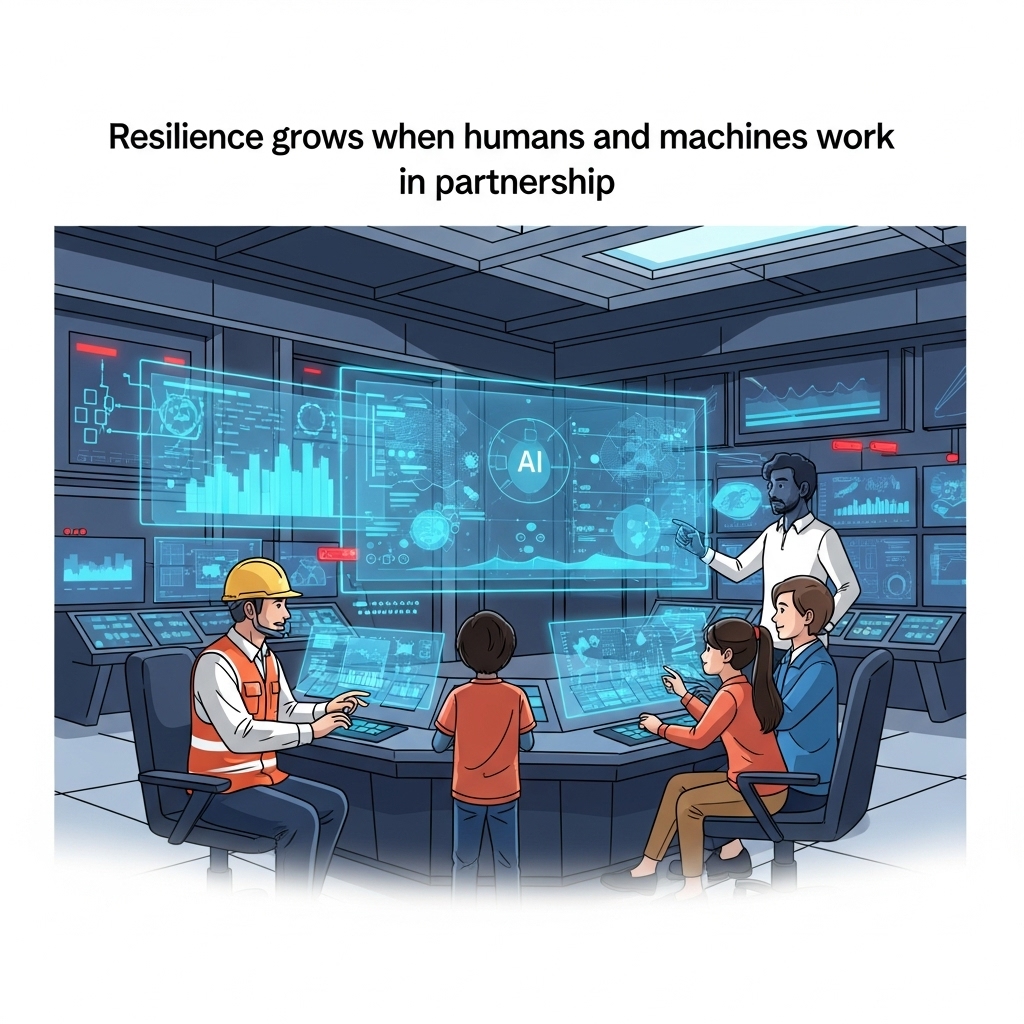
The guidance gives operators a clearer map, and it reinforces that resilience grows when humans and machines work in partnership.
Hello, Smart Learners! Welcome to another week of learning.
Artificial intelligence is becoming deeply integrated into the systems that keep our world running, from the electricity that powers our homes to the water that flows from our taps. But as this technology finds its way into the heart of critical infrastructure, it also brings new questions about safety, accountability, and trust. Recently, a group of global cybersecurity agencies, including the U.S. Cybersecurity and Infrastructure Security Agency (CISA), the FBI, the NSA, and Australia’s Cyber Security Centre, came together to release the first-ever unified guidance on safely using AI in critical infrastructure. This marks a major step forward in how we manage technology that literally keeps our societies functioning.
The new document, titled Principles for the Secure Integration of Artificial Intelligence in Operational Technology (OT), provides a roadmap for how organizations can embrace AI without compromising reliability or safety. It shifts the conversation from theory to practice, offering practical advice for industries like power, water, transportation, and manufacturing. The message is clear: AI is powerful, but it must be used with care and strong human oversight.
One of the most important takeaways from the guidance is the distinction between safety and security. Security is about protecting systems from cyberattacks or unauthorized access, while safety focuses on preventing physical harm to people and the environment. AI complicates this balance because of its ability to make independent decisions and sometimes “hallucinate” or behave unpredictably. For this reason, the guidance warns that large language models should never be responsible for making safety-critical decisions in operational environments. Instead, AI should act as an advisor, offering insights while humans retain full control.
For example, in a water treatment plant, an AI system might detect an unusual reading from a sensor and recommend adjusting the chemical levels. However, if the model misinterprets the data, it could create a dangerous situation. Even if security systems prevent hacking, the safety consequences could still be immediate. The guidance stresses that human operators must always verify AI-generated recommendations using physical measurements or secondary data sources before taking action.
The guidance also highlights architecture design as a key part of AI safety. Agencies recommend a “push-based” approach, meaning that information from operational systems should only be sent outward in a controlled way. This reduces the risk of attackers gaining access through cloud-connected AI systems. In simple terms, AI can assist operators by sending summaries or insights but should never have direct access to the core systems that run physical operations.
Another major point is the importance of human skills and training. As automation increases, many industries are losing experienced technicians and engineers who understand how to operate machinery manually. The guidance warns that over-reliance on AI can lead to a loss of critical human expertise. It encourages organizations to train staff not only to use AI tools but also to question and validate them. Operators should be able to test AI results against real-world readings and challenge unusual outputs rather than accepting them blindly.
Procurement is another area the guidance addresses. As AI becomes more common, many companies are unknowingly purchasing software or equipment that includes AI features without proper disclosure. The guidance recommends that organizations demand transparency from vendors. They should ask questions like: Where was the AI model trained? What data does it use? Is any of our company data being stored or shared with external systems? These details help operators understand and manage the risks associated with AI integration.
Ultimately, the document reinforces a simple truth: humans remain responsible for safety. AI is a powerful assistant, but it should never replace human judgment. The goal is partnership, not replacement. When humans and machines work together with transparency and oversight, systems become more resilient and trustworthy.
For families, this story may seem far from daily life, but the lesson applies everywhere. Whether it is teaching children to verify information online or ensuring professionals understand how technology affects their work, the principle is the same. Smart technology only works when guided by smart people.
As we move into a future where AI shapes industries, communication, and education, the most important task is to stay aware, stay informed, and ensure that innovation never comes at the cost of safety. The path forward is not about choosing between humans or machines—it’s about helping them work together responsibly.
Stay Smart. Stay Secure. Stay Cyber-Aware. Follow us on Instagram @smartteacheronline for practical, family-friendly cyber tips and weekly updates.